
Technical notes
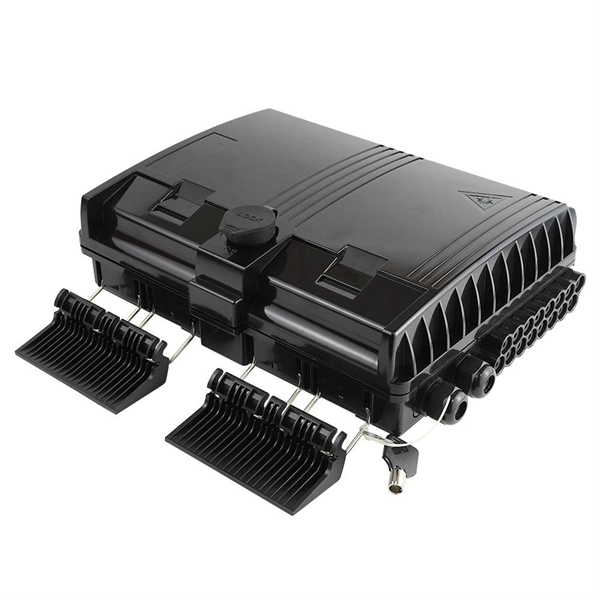
Optical Coupler
Optical coupler is a semiconductor device, which is designed to transfer electrical signals by using light waves in order to provide coupling with electrical isolation between circuits or systems.
Fiber Couplers – optical fiber
Fiber couplers are fiber devices for coupling light from one or several input fibers to one or several output fibers, or from free space into a fiber.
A Review of Optical Coupler Theory, Techniques, and
optical couplers. Coupling at optical frequencies presents challenges to achieving high efficiency, compactness, high fabrication tolerance, and ease
Fiber Coupler Tutorials
The coupling ratio is calculated from the measured insertion loss. Coupling ratio (in %) is the ratio of the optical power from each output port (ports 2 and 3) to the sum of the total power of both output ports
What Is Fiber Optic Coupler and How Does It Work?
Fiber optic couplers are used to split or combine optical signals in optical fiber systems. It contains various types like optical splitters, optical combiners and optical couplers. This tutorial
The "Invisible Hub" of Optical Communication:
What is a fiber optic coupler: the "traffic command" of optical signals. An optical fiber coupler is a passive optical device that can efficiently and stably
Optical Data Couplers
Thanks to their wear-free optical technology, the optical data couplers ensure continuous smooth operation, eliminating high downtime costs. These devices can simultaneously transmit industrial
What Is Fiber Optic Coupler?
A fiber optic coupler is a passive device that distributes or combines optical signals between two or more fibers. It enables signal sharing in multiple directions, acting as an optical
Fused Couplers | OEM Optical Communication Solutions | Corning
Corning''s optical couplers are fused fiber branching devices that split off a portion of light to allow for optical monitoring and feedback. These devices are used extensively in fiber amplifier power control,
Couplers in Optical Communications
Learn about the different types of couplers used in optical communications and their applications in modern optical networks.
The "Invisible Hub" of Optical Communication: Understanding
In modern optical communication networks, fiber optic couplers play a crucial role. It is like an invisible "traffic command", silently completing the distribution and combination of optical
Understanding Optical Coupler and Optical Splitters
Bandwidth coupler and splitters are some of the most important passive devices which are widely used in a number of applications for improving the performance of the whole system in one
Comprehensive Guide to Fiber Optic Couplers and
As the twentieth century progressed and new networking foundations became more valuable for communication systems, so did fiber optic technology.
Fiber Directional Coupler
A fiber directional coupler is defined as an optical component that splits and combines optical signals by utilizing the interference of evanescent waves from two closely positioned fibers, enabling power
A Review of Optical Coupler Theory, Techniques, and Applications
The theory of coupling between different media is well-established, however the field of coupler design is perpetually adapting and developing to meet the evolving demands of optical communication
Demystifying the Fiber Optic Coupler: The Unsung Hero of Light
A fiber optic coupler splits or combines light signals in optical networks, improving data flow, reliability, and network flexibility for various applications.
Corning Optical Communications | Fiber Optic Connectivity Solutions
We deliver optical connectivity solutions for every segment of the network, including carriers, data centers, in-building networks, and original equipment manufacturers (OEM).
OPTICAL FIBER COMMUNICATION
Yasin OUTLINE Introduction about Optical Fibers. Main Characteristics of Fiber Optics Communication System. Light propagation in an Optical Fiber. Mode Analysis for Single Mode Fiber. Mode Analysis
Related Video Reference
This video was associated with the source search result. Verify technical details against current product documentation and project requirements.