
Technical notes
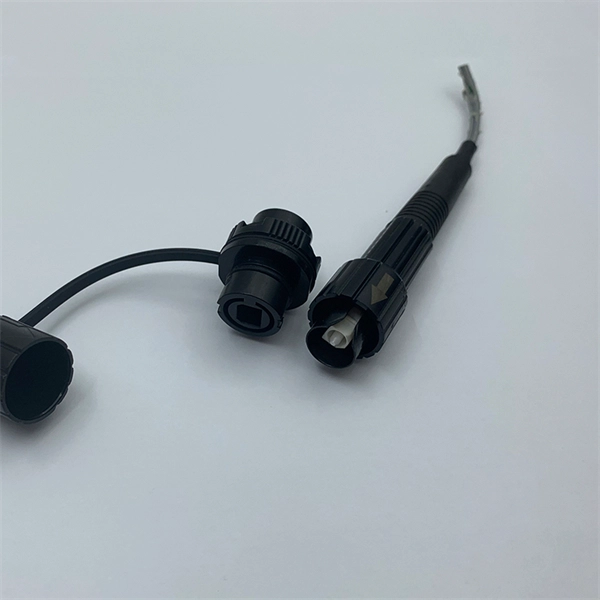
How to connect a single-core optical cable to a ribbon optical cable
This article will guide you through the necessary tools, materials, and methods on how to connect fiber optic cables effectively, ensuring you achieve optimal performance from your fiber optic
Ribbon Fiber Optic Cable
In the video below, Darin Howe discusses the advantages of ribbon cables by explaining the differences between loose tube and ribbon cable designs. He reveals how the use of high fiber count ribbon
Fiber-optic cable
Individual coated fibers (or fibers formed into ribbons or bundles) then have a tough resin buffer layer or core tube (s) extruded around them to form the cable core.
Handbook – Optical fibres, cables and systems
By reducing the core diameter and the refractive index difference between the core and the cladding only one mode (the fundamental one) will propagate and the fibre is then “single-mode” (Figure 1-1c).
Fiber Optic Cable Types | Omnitron Systems Guide
From the fiber core and core size to single mode fiber and multimode fiber cables, each type of optical cable serves a specific purpose depending on transmission
The FOA Reference For Fiber Optics
Different connectors and termination procedures are used for singlemode and multimode connectors. Multimode fibers are relatively easy to terminate, so field termination is generally done by installing
The FOA Reference For Fiber Optics
Some cable designs use a "slotted core" with up to 6 of these 144 fiber ribbon assemblies for 864 fibers in one cable! Since it''s outside plant cable, it''s gel-filled
Ribbon Fiber Cable 101: Five Fundamentals of Ribbon Cable
Ribbon fiber optic cable is exactly what its name says, the ribbon of the fiber, which is formed by a flat strip. This is achieved by making a series of separate fibers and tiling them and
Fiber Optic Cable Types: A Complete Guide
The difference is the number of optical fibers inside the cable; a 3 core cable has three fibers, while a 4 core cable has four. This affects the number of
Multi-mode optical fiber
Applications The equipment used for communications over multi-mode optical fiber is less expensive than that for single-mode optical fiber. Because of its high capacity and reliability, multi-mode
A Comprehensive Guide to Ribbon Cables
Two of our ribbon cable products are the Durable Indoor Optical Cable Flat Fiber Ribbon Cable and Indoor 12 Cores Round Ribbon Cable. Both
Ribbon Fiber Cable A comparison with Non-Ribbon Cable
Optical fiber ribbons are made up of individual fibers aligned in a single row then impregnated with an acrylate UV curable resin. Multiple individual optical ribbons can be stacked into
Ribbon Fiber Cable 101: Five Fundamentals of Ribbon Cable
Ribbon fiber optic cable can be used in indoor FTTH network and indoor/outdoor point-to-point applications, but also for the interconnection and cross-application of MTP fiber wiring box; The
Ribbon cable
Left: 20-way grey ribbon cable with wire for pin 1 marked red, insulation partly stripped. Right: 16-way rainbow ribbon with IDC connector. IDC D-sub connectors DE-9 (male) and DA-15 (female) Twisted
Ribbon Fiber Optic Cable and Splicing: Key Points and
Ribbon fiber optic cables offer high-density connectivity with efficient mass fusion splicing. Learn about their advantages, installation challenges and
Fiber Optic Cable Types – Multimode and Single Mode
Single Mode fibers are identified by the designation OS or Optical Single-mode Fiber. Single Mode cable has a much smaller core (8-9um) than multimode cable and uses a single path (mode) to carry the light.
Ribbon Splicing in Fibre Optic Technology: A Comparison and its
They consist of multiple optical fibres arranged in a flat, ribbon-like format, allowing for more efficient and faster splicing and installation. The specific introduction of such cables varies by region and
How does fiber optics work?
Another type of fiber-optic cable is called multi-mode. Each optical fiber in a multi-mode cable is about 10 times bigger than one in a single-mode
Related Video Reference
This video was associated with the source search result. Verify technical details against current product documentation and project requirements.