Skip to content
PROMETHEASOPTICAL Send a project enquiry
Reference library

Converting single-mode fiber to single-core

Published
  • Converting
  • Single-Mode
  • Fiber
Source context

AI source overview

Single-mode fiber can be adapted to single-core configurations using fiber media converters, transponders, or specialized patch cables to ensure compatibility and extend transmission distances.

Understanding Single-

Mode and Single-Core FiberSingle-mode fiber (SMF) has a small core (approximately 9µm) that allows light to travel in a single path, ideal for long-distance transmission with minimal signal loss. Single-core fiber refers to a fiber with only one light-transmitting channel, as opposed to dual-core or multi-core fibers, which can carry multiple signals simultaneously.

Converting SM

F to a single-core setup is generally about ensuring the optical signal is compatible with a single-channel fiber system, often for long-haul or point-to-point links. Methods for ConversionFiber-to-Fiber Media ConvertersThese devices convert optical signals between different fiber types or modes. For example, a multimode to single-mode converter can extend a network over distances up to 140–160 km.

Media converters typically have two ports: one for the input fiber type and one for the output fiber type. They regenerate the signal, sometimes performing 3R functions (re-amplify, reshape, retime) to maintain signal integrity. Ideal for connecting switches or network segments across buildings or cities.

Mode Conditioning Patch Cables (MCPs)MCPs are duplex patch cords that precisely offset-splice single-mode fiber to multimode fiber, controlling the launch of the laser to prevent modal dispersion. Useful when connecting transceivers designed for longwave outputs (e.g., 1310nm or 1550nm) to a single-core fiber backbone. This method is simpler than media converters but requires compatible transceivers.

WDM Transponders

Wavelength Division Multiplexing (WDM) transponders can convert signals between fiber types while also enabling multiple wavelengths over a single fiber, which is useful in dense networks or DWDM systems. They are particularly effective for long-distance single-core single-mode deployments.

Practical Considerations

Distance and Signal Loss: Single-mode fiber supports longer distances than multimode, so conversion is often necessary when extending networks beyond the typical 500–600 meters of multimode fiber. Wavelength Compatibility: Ensure the transceivers or converters match the operating wavelength (e.g., 850nm for multimode, 1310nm or 1550nm for single-mode) to avoid signal degradation. Network Protocols: Media converters and transponders support various protocols, including Ethernet, Fibre Channel, and industrial Ethernet, making them versatile for different applications.

Cost and Warranty: Using external converters or transponders can reduce costs and avoid voiding switch warranties compared to replacing internal SFPs with proprietary single-mode modules.

Summary

Converting single-mode fiber to a single-core configuration is achievable through fiber media converters, mode conditioning patch cables, or WDM transponders, depending on distance, network protocol, and budget. These solutions ensure signal integrity, extend transmission distances, and maintain compatibility with single-core fiber systems, making them suitable for long-haul, point-to-point, or multi-building network deployments.

Research context

Reference summary

Multi-Mode to Single-Mode Conversion: How to Bridge Convert fiber between multimode and single mode using smart methods for better speed, longer distance.

From reference to enquiry

Questions for your project

Use these editorial prompts alongside the linked excerpts. They identify items to confirm for your project.

Technical notes

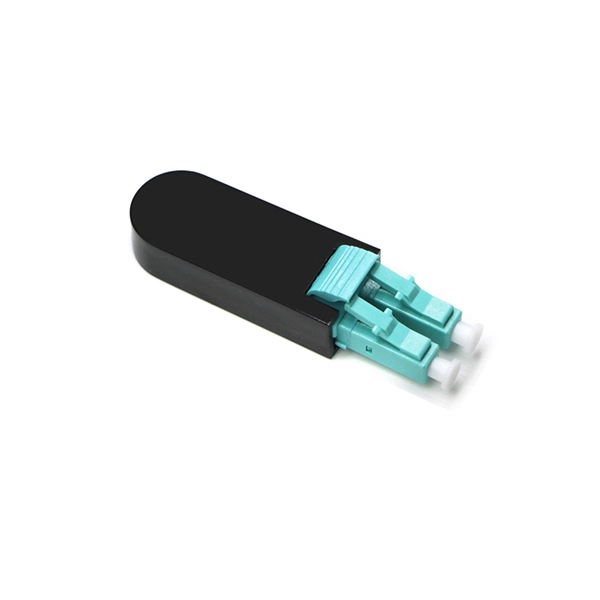
Illustrative equipment image

Multi-Mode to Single-Mode Conversion: How to Bridge

Convert fiber between multimode and single mode using smart methods for better speed, longer distance, and reliable network performance.

How to Convert Multimode to Single-mode Fiber: A Complete Guide

Discover the complete guide on converting multimode to single-mode fiber in communication networks. Understand the differences and learn the necessary steps.

The Key Differences Between 1-core, 2-core, Single

Single Mode fibers have a smaller core, allowing light to travel in a single, straight path, ideal for long distances with less signal loss. Multi-mode

Convert Multimode Fiber to Single-mode Fiber

In this application, two Ethernet switches equipped with multimode fiber ports are connected utilizing a pair of fiber-to-fiber converters which convert the multimode

Can I use single mode equipment over multimode cable and vice

In different cabling environments, optical fiber communication may require multimode to single-mode conversion or single-mode to multimode conversion. But the most typical application is

Fiber Mode Converters

The TC3004 Fiber Optic Mode Converter converts multimode to single mode, or vice versa, in a variety of LAN and Telephony communication network environments. This conversion is done to cross

Single vs Dual Fiber Media Converters (2025): A/B Pairing and WDM

Whether you choose single-fiber BiDi for fiber savings or dual-fiber for simplicity, the fundamentals are the same: match speeds and wavelengths, plan your connectors, and keep optics clean.

How to Convert Multimode to Single-Mode Fiber and Vice Versa

Fiber mode conversion is the process of changing a multimode fiber (MMF) into a single mode or vice versa. There are a couple of ways to connect multimode to single-mode.

Fusion splicing of hollow-core to standard single-mode fibers using a

We study fusion splicing of anti-resonant hollow-core fiber with low loss (0.52 dB) and conventional single-mode fiber using a convenient graded-index bridge fiber.

Is it Possible To Convert Multi

Fiber mode conversion becomes necessary to establish connectivity between multimode and single-mode fiber cables, or to interface a multi-mode fiber cable with a device designed to

Converting media from multimode to singlemode

A modal adapter uses a succession of complex optical lenses to accomplish beam shaping, which shapes the laser signal to excite distinct modes in the core of the multimode fiber. This process

Convert Multimode Fiber to Single-mode Fiber

How to convert Multimode to Single-mode fiber with fiber-to-fiber media converters and transponders. Fiber mode conversion extends fiber distances, enables

The Key Differences Between 1-core, 2-core, Single Mode, and

The secret lies in fiber optic technology, and understanding the basics—1-core, 2-core, Single Mode (SM), and Multi-mode (MM)—is key to mastering this field.

Single Mode to Multimode Converters | Fiber to Fiber

Easily connect different fiber types and wavelengths to convert Single Mode to Multimode (SM to MM), or extend the distance of Multimode networks.

Fiber Mode Converters

MM-to-SM Fiber Converter (OC-12 rate up to 622 Mbps) (TC3004) The TC3004 Fiber Optic Mode Converter converts multimode to single mode, or vice versa, in a variety of LAN and Telephony

Multimode to Single-Mode Fiber Conversion

Because of different fiber diameter of their cores, they have different applications. Single-mode fiber cable is preferred to use in long distance, high bandwidth runs, and multimode fiber cable is often

Converting a multimode fiber into a single-mode fiber

A multimode fiber infrastructure can be used to support single-mode Silicon Photonics by coupling only to the lowest-order mode of the fiber. This allows Silicon Photonics to share a common

The Key Differences Between 1-core, 2-core, Single

Go with Single Mode (SM) modules, especially 1-core SM for simple long-distance needs, or 2-core SM if your system demands redundancy and

Share your network requirements

Share the fiber interfaces, termination capacity, cable route and evidence required for handover.

Send a project brief