Skip to content
PROMETHEASOPTICAL Send a project enquiry
Reference library

Data Center Power Distribution Box Layout Scheme

Published
  • Data
  • Center
  • Power
Source context

AI source overview

A well-designed data center power distribution layout ensures redundancy, safety, and maintainability by strategically arranging switchgear, transformers, UPS systems, and PDUs according to Tier standards and electrical codes.

Overview of Power Distribution in Data Centers

The Power Distribution Room (PDR) is a dedicated, access-controlled space that receives utility power, conditions it, and distributes it to IT and mechanical loads. It is physically separated from the server floor to ensure safety, maintainability, and compliance with regulatory requirements. Utility power typically arrives at medium voltage (15–34.5 kV) and is stepped down via dry-type transformers to low-voltage levels (480V/208Y-120V in North America, 400V/230V in Europe) for distribution to UPS systems and PDUs.

Key Components and Layout ConsiderationsMedium-Voltage Switchgear and TransformersMV switchgear controls incoming utility power and feeds step-down transformers. Transformers should comply with efficiency regulations (e.g., EU Ecodesign 2019/1783) and have impedance in the 2–8% range to manage fault currents. Adequate clearance around switchgear and transformers is critical for maintenance and arc-flash safety.

Low-

Voltage Switchgear and Automatic Transfer Switches (ATS)LV switchboards distribute power from transformers to UPS systems, sub-distribution boards, and mechanical loads. Compliance with IEC 61439-1 and IEC 61439-2 ensures safety and reliability. Layout should allow dual-path (A+B) distribution to support redundancy and minimize single points of failure.

Uninterruptible Power Supply (UPS) SystemsDouble-conversion online UPS (VFI) is standard for Tier III and IV data centers, providing complete isolation from utility disturbances.

Modular UP

S systems with hot-swappable modules improve maintainability and scalability. Power Distribution Units (PDUs) and Rack-Level DistributionPDUs provide branch circuit protection, monitoring, and automatic transfer switching at the rack level. Remote Power Panels (RPPs) can be used to extend distribution closer to IT loads while maintaining redundancy.

Layout Best Practices

Physical Separation: Maintain separate compartments for Side A and Side B in Tier IV designs to prevent a single fault from affecting both paths. Clearances: Ensure sufficient working space around all equipment for maintenance and emergency access. Redundancy: Implement N+1 or 2N configurations for UPS and generator systems to maintain uptime during failures.

Modularity: Use modular switchgear, UPS, and PDU components to allow phased expansion and easier maintenance. Thermal Management: Account for heat generated by transformers, switchgear, and UPS systems; avoid sharing ventilation with battery rooms or server racks. Code Compliance: Follow local electrical codes (NEC, IEC) and data center standards (EN 50600, ANSI/TIA-942, Uptime Institute Tier Standard) for safety, efficiency, and reliability.

Practical Design Tips

Position transformers and switchgear near the service entrance to minimize cable runs. Route dual redundant feeders to UPS and PDUs to support A+B power paths. Use intelligent rPDUs for monitoring and load balancing at the rack level.

Plan for future expansion by leaving space for additional modules and distribution panels. Ensure arc-flash protection and labeling for all high-voltage equipment. By following these principles, a data center can achieve high reliability, maintainability, and compliance, reducing the risk of costly outages and supporting long-term operational efficiency.

Research context

Reference summary

WHITE PAPER System plus system (2N) electrical distribution Data This document provides a reference for how advanced solutions can be used to support the d.

From reference to enquiry

Questions for your project

Use these editorial prompts alongside the linked excerpts. They identify items to confirm for your project.

Technical notes

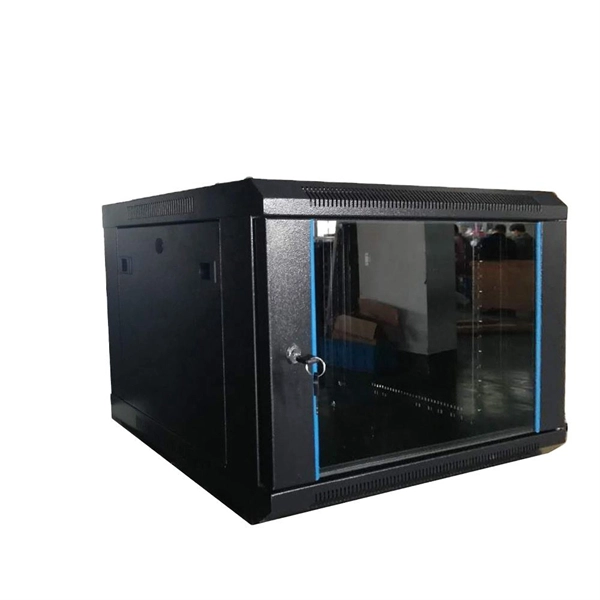
Illustrative equipment image

WHITE PAPER System plus system (2N) electrical distribution Data

This document provides a reference for how advanced solutions can be used to support the design and implementation of a power distribution and monitoring system for a data center.

Application Models for Power Distribution – Data Centres

PDF file

Presentation - ABB

The main objective is to support data center electrical distribution designers by providing an example of a fully designed low voltage power distribution for a data center along with its main components

Electrical Distribution Equipment in Data Center Environments

Figure 1 provides a block diagram of an electrical distribution system showing the name and the typical location of the electrical distribution equipment in a data center and the power flow path.

Data Center Electrical Planning: Reliable Power Supply | Distribution

Explore data center electrical planning & distribution systems for reliability, efficiency. Learn from Google and Microsoft data center case studies.

The Basics of Electrical Data Center Design in 2025

The guide covers power supply chains, switchgear, transformers, UPS systems, rack distribution, redundancy concepts, and the standards that

Power Distribution System Design for Data Centers and Mission

A technical guide to power distribution system design for data centers and mission-critical facilities — covering redundancy tiers, UPS systems, PDUs, generator sizing, fault tolerance

Data Center Power Planning Guide 2026: Load Calculations, UPS

The complete technical guide to data center power planning — validated load calculations for IT, UPS, cooling, and lighting; generator sizing formulas; N/N+1/2N redundancy; pay

Data Center Rack Power Distribution Explained: CEE

Learn how power flows inside modern data center racks—from facility power to rack PDUs. Discover how E-abel server cabinets and CEE

Comparing Data Center Power Distribution Architectures

Executive summary Significant improvements in efficiency, power density, power monitoring, and reconfigurability have been achieved in data center power distribution, increasing the options

Designing data center electrical distribution systems

Designing efficient and reliable data center electrical systems requires looking through the eyes of the electrical engineer—and the owner.

Energy Efficient Datacenters: Electrical Design

Sun has found that busway power distribution provides the most efficient and modular way to distribute power to the racks and has standardized on technology for new datacenters.

Example power distribution infrastructure in a data center.

Power management is a key component of modern data center design. Power managers must (1) ensure the cost-and energy-efficient utilization of the data center infrastructure, (2) maintain

Data Center Power Design: Architecture Basics (2026)

How data center power is designed for uptime: feeds, UPS, generators, and redundancy levels. A clear guide to power architecture for 2026 builds.

Optimizing Data Center Power Distribution Through Innovative

Introduction This white paper explores power distribution in the changing data center landscape, highlighting the emerging trends impacting the industry and evaluating the suitability of innovative

A Scalable, Reconfigurable, and Efficient Data Center Power

The modular power distribution system is shown to be particularly advantageous in practical data centers where layout is not precisely defined in advance, in retrofit applications, and in cases where

Complete Guide for Power Distribution in Servers, Racks, and Data Centers

Power Distribution Units (PDUs) are the crucial link between your facility''s electrical infrastructure and your IT equipment. These devices ensure clean, stable power reaches every server, switch, and

WHITE PAPER System plus system (2N) electrical distribution Data Center

The main objective is to support data center electrical distribution designers by providing an example of a fully designed low voltage power distribution for a data center along with its main components. The

Data Center Power Design Overview | phoenixNAP Blog

Effective data center power design is the foundation for optimizing performance, minimizing disruptions, and mitigating security risks.

Share your network requirements

Share the fiber interfaces, termination capacity, cable route and evidence required for handover.

Send a project brief