Skip to content
PROMETHEASOPTICAL Send a project enquiry
Reference library

Devices for fiber optic communication

Published
  • Devices
  • Fiber
  • Optic
Source context

AI source overview

Fiber optic communication relies on a combination of active and passive devices, including transmitters, receivers, amplifiers, splicing tools, and network interface equipment to ensure high-speed, reliable data transmission.

Core Transmission Devices

Transmitters and Light Sources: These convert electrical signals into optical signals. Common light sources include Laser Diodes (LDs) for long-distance, high-speed communication and Light Emitting Diodes (LEDs) for shorter distances or multimode fibers. The transmitter also includes a source driver circuit to modulate the light according to the input data.

Optical Receivers: These devices convert incoming light signals back into electrical signals. They typically use photodetectors such as PIN diodes or avalanche photodiodes (APDs) to detect light intensity and reconstruct the original data. Optical Transceivers: These modules combine transmitter and receiver functions in a single unit.

They come in various form factors like SFP, SFP+, QSFP28, and QSFP-DD, supporting different data rates and distances. Transceivers are critical for connecting switches, routers, and servers to fiber networks.

Passive Components

Fiber Optic Cables: The medium for light transmission, available as single-mode fiber (SMF) for long distances and multi-mode fiber (MMF) for shorter, high-bandwidth applications. Splitters and Couplers: Passive devices that divide or combine optical signals. Planar Lightwave Circuit (PLC) splitters are widely used in FTTH networks to distribute signals from a central office to multiple endpoints.

Wavelength Division Multiplexing (WDM): Devices that allow multiple data streams to travel over a single fiber by assigning different wavelengths to each stream.

Dense WD

M (DWDM) is used for high-capacity, long-haul networks.

Signal Management and Amplification

Optical Amplifiers: Devices like Erbium-Doped Fiber Amplifiers (EDFA) and Raman amplifiers boost signal strength without converting light back to electrical signals, essential for long-distance transmission. Optical Line Terminals (OLT) and Optical Network Terminals (ONT): OLTs manage data flow at the service provider's end, while ONTs convert optical signals to electrical signals for end-user devices, often integrating Wi-Fi functionality.

Installation and Maintenance Tools

Splicing Tools: Fusion splicers permanently join fibers with minimal signal loss, while mechanical splicers provide temporary connections. Proper splicing ensures network reliability. Cable Preparation Tools: Include cable jacket strippers, buffer tube strippers, and precision fiber cleavers to prepare fibers for splicing or connectorization.

Testing and Monitoring Devices: Optical Time Domain Reflectometers (OTDRs), optical power meters, and light sources are used to measure signal loss, locate faults, and verify network integrity.

Supporting Equipment

Routers and Network Interface Cards (NICs): Routers distribute the converted electrical signals to multiple devices, while NICs enable computers to connect to the network. Ethernet Cables: Used for wired connections between routers and devices, supporting high-speed data transfer in conjunction with fiber networks. By combining these devices, fiber optic communication systems achieve high-speed, long-distance, and reliable data transmission, supporting applications from FTTH and 5G networks to data centers and international backbones.

Research context

Reference summary

Modern fiber-optic communication systems generally include optical transmitters that convert electrical signals into optical signals, to carry the signal, optical amplifiers, and optical receivers to convert the signal back into an electrical signal. The information transmitted is typically generated by computers or.

Additional context

Source notes

Modern fiber-optic communication systems generally include optical transmitters that convert electrical signals into optical signals, to carry the signal, optical amplifiers, and optical receivers to convert the signal back into an electrical signal. The information transmitted is typically generated by computers or .

From reference to enquiry

Questions for your project

Use these editorial prompts alongside the linked excerpts. They identify items to confirm for your project.

Technical notes

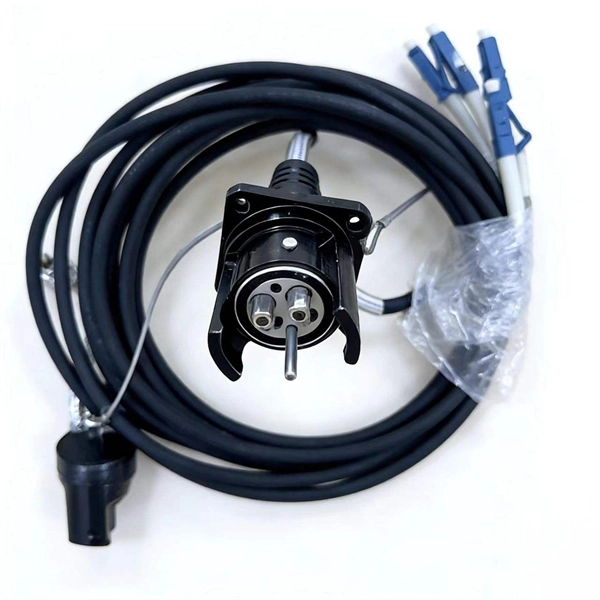
Illustrative equipment image

Optical Fiber Communication Devices

This page introduces high-speed, large-capacity, low-power consumption optical devices ideal for optical fiber communication systems.

Fiber-optic communication

OverviewTechnologyBackgroundApplicationsHistoryParametersComparison with electrical transmissionGoverning standards

Modern fiber-optic communication systems generally include optical transmitters that convert electrical signals into optical signals, optical fiber cables to carry the signal, optical amplifiers, and optical receivers to convert the signal back into an electrical signal. The information transmitted is typically digital information generated by computers or telephone systems.

Optical fiber

An optical fiber, or optical fibre, is a flexible glass or plastic fiber that can transmit light from one end to the other. Such fibers are widely used in fiber-optic

Fiber Optic Devices and Their Applications in Optical Communication

This article introduces fiber optic devices, describes various types like connectors and couplers, and outlines their applications in fields such as military communications, WDM networks, and power

Fiber Optics Handbook

Optical fiber science and technology relies heavily on both geometrical and physical optics, materials science, integrated and guided-wave optics, quantum optics and optical physics, communications

What Is Fiber Optics? A Guide

Fiber optics technology uses light pulses to transmit data, resulting in quicker, more reliable data transfers between sources than copper cables.

Fiber Optic Communication System : Basic Elements & Its Working

Basic Elements of a Fiber Optic Communication System For gigabits and beyond gigabits transmission of data, fiber optic communication is the ideal choice. This type of communication is used to transmit

Three-dimensional integrated optical fiber devices: emergence and

Furthermore, the paper elaborates on approaches to enhance the functionality of these fiber devices through laser microprocessing and material integration techniques. These advancements offer

What Is Optical Fiber Technology, and How Does It Work?

So, what are fiber optics used for? In a nutshell, for signal transmission, communication and vision (video). How Does a Fiber Optic Cable Work? Light

Fibre Optic Communication Devices

Download Citation | Fibre Optic Communication Devices | The book covers all essential elements of current and next generation fibre optic networks, including many that are ignored in other

How Fiber Optics Work

Fiber-optic lines have revolutionized phone calls, cable TV and the internet. It''s a really cool technology that enables the long-distance transmission of data in light

Fiber Optic Communication Equipment, Optical Communication Devices

Discover the game-changing fiber optic communication equipment and optical communication devices by JUNPU. Boost connectivity and data transfer like never before! Experience the future now.

What is Optical Transceiver: A Beginner Guide (2024)

What is an Optical Transceiver? An optical transceiver, also known as a fiber optic transceiver or optical module, is a small packaged device that uses fiber optic technology to transmit

Understanding Fiber Optic Communication System: Working,

Discover how fiber optic communication systems convert electrical signals into light pulses to deliver ultra-fast, reliable data transmission across long distances.

What Equipment is Needed for Fiber Optic Internet?

Setting up fiber optic internet requires specific equipment to ensure you enjoy its high-speed, reliable benefits. From the ONT and router to cables and extenders, each component plays a

What equipment is needed for fiber optic internet?

Confused about what equipment is necessary for fiber optic internet? This guide has you covered with everything you need to know.

Understanding Fiber Optic Communication System: Working,

The fiber optic communication system illustrated in the diagram is essential to the digital age. It takes electrical signals, turns them into light, transmits them through glass fibers, and

A Practical Guide to Fiber Optic Equipment and its Uses

A practical guide to fiber optic equipment, covering splicers, OTDRs, power meters, and essential tools used to build, test, and maintain modern fiber

Related Video Reference

This video was associated with the source search result. Verify technical details against current product documentation and project requirements.

Share your network requirements

Share the fiber interfaces, termination capacity, cable route and evidence required for handover.

Send a project brief