Skip to content
PROMETHEASOPTICAL Send a project enquiry
Reference library

Fiber optic communication 100G

Published
  • Fiber
  • Optic
  • Communication
Source context

AI source overview

100G fiber optic communication enables high-speed data transmission at 100 gigabits per second using advanced optical technologies over single-mode or multimode fibers. Overview of 100G Fiber Optic Technology100G fiber optic communication, often referred to as 100GBASE, is part of the IEEE 802.3 Ethernet standard and supports data rates of 100 Gbps. The "FR" in 100GBASE-FR indicates single-mode fiber transmission over distances up to 2 kilometers, making it suitable for data centers, cloud providers, and metropolitan networks.

This technology uses wavelength division multiplexing (WDM) to transmit multiple data streams over the same fiber at different wavelengths, improving fiber utilization and network efficiency.

Transmission Techniques100

G communication typically employs parallel transmission, where four 25Gbps channels are combined to achieve 100Gbps. Each channel transmits data through a separate fiber core, and the signals are reassembled at the receiving end. Advanced modulation techniques like PAM4 (Pulse Amplitude Modulation) are used to increase bandwidth efficiency and reduce signal degradation over longer distances.

Fiber TypesSingle-mode fiber (SMF): Features a small core (~9 microns) allowing light to travel in a single path, minimizing modal dispersion. Ideal for long-distance and inter-building connections. Multimode fiber (MMF): Has a larger core (50–62.5 microns) supporting multiple light modes, suitable for short-distance applications like data center backbones.

OM3, OM4, and OM5 fibers are commonly used for 100G multimode links, supporting distances up to 300 meters.

Optical Modules100

G optical modules, such as QSFP28 FR or single-fiber WDM modules, are used to implement 100G links. Single-fiber modules transmit bidirectional data over a single fiber using different wavelengths (e.g., TX1330nm/RX1270nm), reducing fiber usage by 50% and simplifying cabling. These modules are compatible with existing LC/SC interfaces and can integrate with 400G switches and routers, providing scalability and flexibility.

Applications100

G fiber optic communication is widely deployed in: Data centers: High-speed server interconnects and backbone links. Cloud computing: Supporting large-scale data processing and high-definition video streaming. Metropolitan area networks (MANs): Short-distance high-speed connectivity between buildings or city-wide networks.

5G transport networks: Backhaul links between core networks and base stations, especially where fiber resources are limited.

Advantages

High bandwidth: Supports 100Gbps, enabling large data transfers and cloud services. Efficient fiber usage: WDM and single-fiber modules reduce the number of fibers required. Scalability: Compatible with future 400G networks.

Low signal degradation: Single-mode fibers and advanced modulation techniques ensure reliable transmission over longer distances. 100G fiber optic communication represents a critical technology for modern high-speed networks, providing the capacity, efficiency, and flexibility required for data-intensive applications and future network expansion.

Research context

Reference summary

40 Gigabit Ethernet (40GbE) and 100 Gigabit Ethernet (100GbE) are groups of technologies for transmitting at rates of 40 and 100 (Gbit/s), respectively. These technologies offer significantly higher speeds than. The technology was first defined by the standard and later by the 802.3bg-2011, 802.3bj-2014, 802.3bm-2015, and 802.3cd-2018 standards.

The first succeeding specification.

Additional context

Source notes

40 Gigabit Ethernet (40GbE) and 100 Gigabit Ethernet (100GbE) are groups of technologies for transmitting at rates of 40 and 100 (Gbit/s), respectively. These technologies offer significantly higher speeds than . The technology was first defined by the standard and later by the 802.3bg-2011, 802.3bj-2014, 802.3bm-2015, and 802.3cd-2018 standards. The first succeeding specification…

From reference to enquiry

Questions for your project

Use these editorial prompts alongside the linked excerpts. They identify items to confirm for your project.

Technical notes

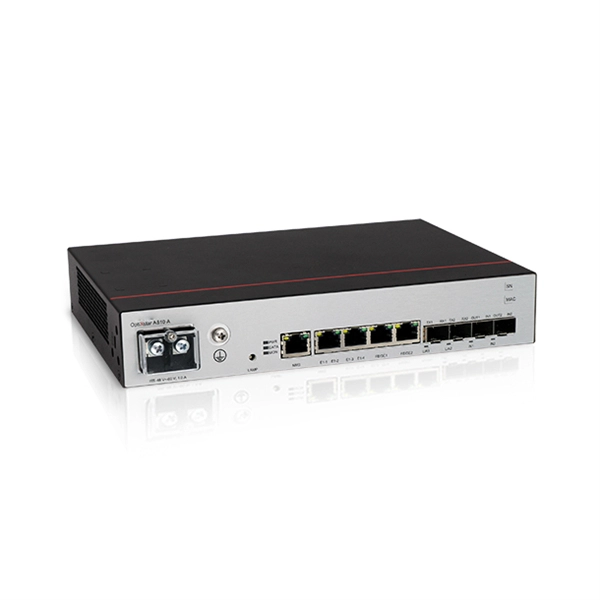
Illustrative equipment image

100GBASE FR Optical Transceiver Overview

As technology advances, modern communication networks face unprecedented challenges. The 100GBASE-FR, based on the IEEE 802.3 Ethernet standard, offers high-speed

What is 100G FR Optical Transceiver?

In practice, 100G FR optical modules are inserted into network equipment ports to realize high-speed data transmission. It is widely used in data

100 Gigabit Ethernet

OverviewStandards developmentEarly productsCommercial trials and deploymentsStandards100G interface typesChip-to-chip/chip-to-module interfacesPluggable optics standards

40 Gigabit Ethernet (40GbE) and 100 Gigabit Ethernet (100GbE) are groups of computer networking technologies for transmitting Ethernet frames at rates of 40 and 100 gigabits per second (Gbit/s), respectively. These technologies offer significantly higher speeds than 10 Gigabit Ethernet. The technology was first defined by the IEEE 802.3ba-2010 standard and later by the 802.3bg-2011, 802.3bj-2014, 802.3bm-2015, and 802.3cd-2018 standards. The first succeeding Terabit Ethernet specification

JTOPTICS 100G Transceivers | High-Performance 100G Solutions

100G Transceivers by JTOPTICS deliver high-speed optical data transmission and are ideal for data centers, enterprise networks, and telecom applications. Engineered for reliability and scalability,

Understanding the World of 100GB Fiber Optic Cables

High-speed data transmission is in high demand, and thus, 100GB fiber optic cables are becoming more prominent in telecommunications and

Know Your 100G Transceiver | Juniper Networks

100 Gigabit Ethernet (100G) transceivers are optical modules that handle data rates of 100 Gbps. With a transmission rate of up to 100 Gbps, 100G transceivers serve as essential components for

Overview of 100G SFP Types

Explore the different 100G SFP types and how they support high-performance networks. Find the best options for your business''s connectivity needs.

The Ins and Outs of Bidirectional Fiber Communication

These deployments save network resources, cut infrastructure costs, and allow you to maximize the cabling you already have in the walls. This guide explains how bidirectional

Data Center 40G and 100G Multimode Fiber

Learn how 40G and 100G multimode fiber connectivity continues to provide reliable and low-cost solutions in the data center.

Understanding the 100G LR4 Transceiver for Modern

This comprehensive guide dives deep into the technology, specifications, applications, and best practices for deploying these essential

How does fiber optics work?

An easy-to-understand introduction to fiber optics (fibre optics), the different kinds of fiber optic cables, and how light travels down them.

Fiber Optic Basics | Optical Fiber 101 | Corning

Use our fiber 101 tutorials and videos and get the fiber optic basics to learn why optical fiber has fundamentally changed and improved communication.

Multi-mode optical fiber

Multi-mode optical fiber is a type of optical fiber mostly used for communication over short distances, such as within a building or on a campus. Multi-mode links can be used for data rates up to 800 Gbit/s.

What Is Fiber Optics? A Guide

Fiber optics technology uses light pulses to transmit data, resulting in quicker, more reliable data transfers between sources than copper cables.

Fiber Optic Cable Speeds: Everything You Need to Know

Discover how fiber optic cable speeds can revolutionize your internet experience. Explore the future of connectivity and get ready to zoom into the fast lane.

Fiber Optics and Types

Fibre optics, with its high bandwidth, low electromagnetic interference, and resilience, is critical for modern telecommunications, internet, medical, and military applications. Despite greater

Fiber-Optic Communication

Fiber optic communication The optical communication system is based on laser diodes as transmitters and photodetector as receiver. The fiber optic cable is constructed from five layers, core, cladding,

Future of Fiber Optic Networks: 10G, 100G & Beyond

Explore the evolution of fiber optic networks from 10G to 100G and beyond. Learn about new technologies shaping ultra-fast, high-capacity connectivity.

Related Video Reference

This video was associated with the source search result. Verify technical details against current product documentation and project requirements.

Share your network requirements

Share the fiber interfaces, termination capacity, cable route and evidence required for handover.

Send a project brief