Skip to content
PROMETHEASOPTICAL Send a project enquiry
Reference library

Fiber Optic Communication

Published
  • Fiber
  • Optic
  • Communication
Source context

AI source overview

Fiber-optic communication transmits data as light pulses through optical fibers, offering high-speed, long-distance, and interference-resistant communication. OverviewFiber-optic communication is a method of transmitting information by sending pulses of light—either infrared or visible—through an optical fiber, which acts as a waveguide for the light signal (Wikipedia, TelecomTrainer ). Unlike electrical signals in copper wires, light signals experience low attenuation and are immune to electromagnetic interference, making fiber-optics ideal for high-bandwidth and long-distance applications (SemiconductorForU, GeeksforGeeks ).

Working Principle

The system operates on the principle of total internal reflection, where light is confined within the fiber core by the surrounding cladding, allowing it to travel long distances with minimal loss (Britannica, GeeksforGeeks ). The basic steps include: Signal Conversion: Electrical signals (digital or analog) from computers, telephones, or other devices are converted into light pulses using a transmitter, typically a laser diode (LD) or light-emitting diode (LED) (Wikipedia, TelecomTrainer ). Transmission: The light pulses travel through the optical fiber, which consists of: Core: The central, transparent medium where light propagates.

Cladding: Surrounds the core and ensures total internal reflection.

Coating/

Buffer: Protects the fiber from physical damage and moisture (GeeksforGeeks ). Reception: At the receiver end, a photodetector converts the light pulses back into electrical signals, which are then amplified and decoded for use (SemiconductorForU ).

Components

Optical Transmitters: Convert electrical signals to light. Optical Fibers: Transmission medium for light signals. Optical Amplifiers: Boost signal strength over long distances.

Optical Receivers: Convert light back to electrical signals. Connectors and Couplers: Facilitate joining and splitting of fibers (TelecomTrainer ).

Advantages

High Bandwidth: Supports extremely high data rates, suitable for internet backbones and 5G networks (TelecomTrainer ).

Long-

Distance Transmission: Minimal signal loss allows communication over hundreds of kilometers without repeaters (Britannica ). Immunity to Electromagnetic Interference: Ideal for industrial and medical environments (Wikipedia ). Security: Difficult to tap without detection, enhancing data security.

Applications

Telecommunications: Telephone, internet, and cable TV transmission (Wikipedia, SemiconductorForU ). Networking: Local area networks (LANs) and data centers. Medical: Endoscopy and imaging tools.

Defense and Industrial: Sensors for pressure, temperature, and seismic monitoring. Research: High-speed data transmission experiments, such as Bell Labs achieving over 100 petabit-kilometers per second (Wikipedia ). Fiber-optic communication has largely replaced copper wiring in backbone networks due to its superior performance, reliability, and scalability, making it a cornerstone of modern digital communication infrastructure (Britannica, GeeksforGeeks ).

Research context

Reference summary

Understanding Fiber Optic Communication System: Working, Fiber optic communication refers to a method of transmitting data that utilizes light instead of e.

From reference to enquiry

Questions for your project

Use these editorial prompts alongside the linked excerpts. They identify items to confirm for your project.

Technical notes

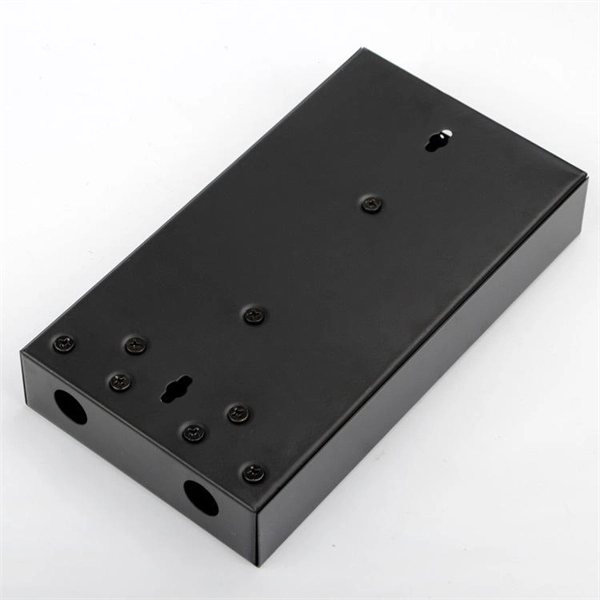
Illustrative equipment image

Understanding Fiber Optic Communication System: Working,

Fiber optic communication refers to a method of transmitting data that utilizes light instead of electrical signals to send information through optical fibers. It works on the principle of total internal

Fiber-Optic Communication

Fiber optic communication (FOC) is defined as a communication infrastructure that utilizes optical fibers to provide reliable data transmission with strict Quality of Service and nearly unlimited bandwidth,

Fiber optics | Definition, Inventors, & Facts | Britannica

Fiber optics, the science of transmitting data, voice, and images by the passage of light through thin, transparent fibers. In telecommunications, fiber

OPTICAL FIBER COMMUNICATION

Fibre Optics Material Choice? H.H.Hopkins and N.S.Kapnay in 1950''s used cladding fiber: Good image properties demonstrated for 75 cm long fiber [Nature 173, 39 (1954)]. Application found use in

Fiber Optics and Types

Fibre optics, with its high bandwidth, low electromagnetic interference, and resilience, is critical for modern telecommunications, internet, medical, and military applications. Despite greater

Armored Fiber Optic Cable for Railway Tunnel Communication and

Source armored fiber optic cable for railway tunnel communication by confirming technical specifications, quality control, application fit, customization, order quantity, packaging, and delivery.

Best 10 Fiber Optic Cable Manufacturers

Find reliable fiber optic cable manufacturers for your project. Compare 10 top-rated global suppliers including Corning, YOFC, and Zion Communication — a proven OEM/ODM factory for B2B

OFC: Optical Fiber Communications Conference and Exhibition

The Optical Fiber Communication Conference and Exhibition (OFC) is the premier conference and exhibition for optical communications and networking professionals.

What Is a Fiber Optic Pigtail? Full Guide to Pigtail Fiber

A Fiber Optic Pigtail Complete Guide: As per types, connectors, and applications. In such contemporary fiber optic communication systems, low-loss,

Fiber-optic Switches

Fiber-optic switches generally allow for rerouting optical signals in fibers, mainly in optical fiber communications.

price-of-fully-automated-fiber-optic-communication Manufacturer

28 suppliers for price-of-fully-automated-fiber-optic-communication Manufacturer/Producer Find wholesalers and contact them directly B2B martketplace Find companies now!

Optical Communications Products

Browse our optical communication connectivity products designed to help you enable your communication networks. Easily create a bill of materials list.

What is a Subsea Fiber Optic Cable

1. What is a Submarine (Subsea) Fiber Optic Cable? Submarine fiber optic cables carry over 99% of international data traffic. Unlike terrestrial cables,

Top 10 Fiber Optic Cable Manufacturers in China

When selecting fiber optic cable manufacturers, considering your specific requirements and these companies'' capabilities is crucial.

Optical fiber

Such fibers are widely used in fiber-optic communication, where they permit transmission over longer distances and at higher bandwidths (data transfer

Optical Fibre Communication: Working Principle,

Fiber-optic communication is a method of transmitting data from one point to another by sending infrared light pulses through an optical fibre. Light

Related Video Reference

This video was associated with the source search result. Verify technical details against current product documentation and project requirements.

Share your network requirements

Share the fiber interfaces, termination capacity, cable route and evidence required for handover.

Send a project brief