Skip to content
PROMETHEASOPTICAL Send a project enquiry
Reference library

Fiber Optic Sensing Technology System

Published
  • Fiber
  • Optic
  • Sensing
Source context

AI source overview

Fiber optic sensing systems transform optical fibers into distributed sensors capable of monitoring strain, temperature, vibration, and other environmental parameters in real time.

Overview of Fiber Optic Sensing

Fiber optic sensing technology uses the physical properties of light traveling through optical fibers to detect changes in the environment, such as temperature, strain, vibration, or acoustic signals. Unlike traditional sensors, the fiber itself acts as a continuous sensor, providing thousands of sensing points along its length. This approach, known as distributed fiber optic sensing (DFOS), allows for real-time monitoring over long distances, often exceeding 45 km, without requiring line-of-sight or external power along the fiber.

Types of Fiber Optic Sensing Systems

Distributed Temperature Sensing (DTS) – Measures temperature variations along the fiber, useful for monitoring power cables, pipelines, and industrial processes. Distributed Temperature and Strain Sensing (DTSS) – Detects both temperature and mechanical strain, enabling structural health monitoring of bridges, aircraft, and spacecraft. Distributed Acoustic Sensing (DAS) – Captures vibrations and acoustic signals, allowing detection of vehicle movement, digging activity, or seismic events.

Quasi-

Distributed Sensors – Use discrete sensing points, such as Fiber Bragg Gratings (FBGs), to measure specific locations along the fiber.

How Fiber Optic Sensing Works

A laser or light source is injected into the fiber, and an interrogator measures changes in the backscattered light caused by environmental interactions. Variations in light intensity, phase, or wavelength correspond to physical changes like strain, temperature, or vibration. The system can pinpoint the exact location of events along the fiber, providing high-resolution monitoring for critical infrastructure.

Applications

Fiber optic sensing systems are widely used across industries: Aerospace: NASA's Fiber Optic Sensing System (FOSS) monitors structural stress, deformation, and operational loads in aircraft, UAVs, and spacecraft, replacing bulky wired sensors and enabling thousands of data points along a single fiber. Energy and Utilities: Monitoring power lines, pipelines, and offshore wind farms for temperature anomalies, strain, or potential faults. Transportation and Security: Detecting vehicle movement, rail traffic, border security breaches, and seismic activity.

Environmental Monitoring: Measuring temperature, liquid levels, and structural integrity in industrial and natural environments. Subsea Applications: Transforming submarine cables into earthquake warning systems or monitoring undersea infrastructure.

Advantages

High spatial resolution: Thousands of sensing points along a single fiber. Long-distance monitoring: Continuous sensing over tens of kilometers. Lightweight and compact: Reduces weight and complexity compared to traditional wired sensors.

Multiparameter sensing: Simultaneously measures temperature, strain, vibration, and more. Cost-effective: Existing fiber networks can often be repurposed for sensing.

Industry and Market

The global fiber optic sensing market is growing rapidly, with applications expanding in smart infrastructure, aerospace, energy, and security. Organizations like the Fiber Optic Sensing Association (FOSA) promote the adoption of these technologies and provide resources for education, standards, and industry collaboration. Fiber optic sensing systems represent a transformative technology, turning ordinary optical fibers into a digital sensory network capable of real-time monitoring, predictive maintenance, and enhanced safety across multiple sectors.

Research context

Reference summary

Turning Fiber into a Sensing System: The Magic of Imagine a world where the Internet doesn't just connect but senses —detecting earthquakes, monitoring bat.

From reference to enquiry

Questions for your project

Use these editorial prompts alongside the linked excerpts. They identify items to confirm for your project.

Technical notes

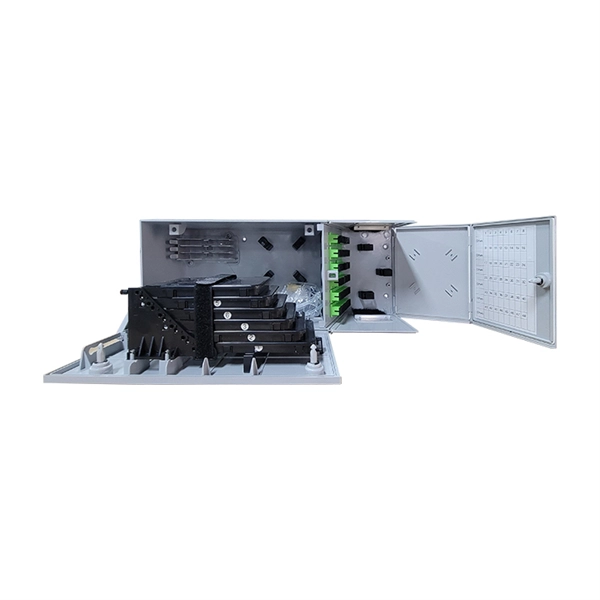
Illustrative equipment image

Turning Fiber into a Sensing System: The Magic of

Imagine a world where the Internet doesn''t just connect but senses —detecting earthquakes, monitoring battery health, or safeguarding critical

What is Fiber Optic Sensing?

Learn how fiber optic sensing technology, including distributed acoustic sensing (DAS), distributed temperature sensing (DTS), and distributed temperature and strain sensing (DTSS), delivers real

Introduction to Fiber Optic Sensing

Through webinars, videos, white papers, public presentations and public policy advocacy, the organization provides information on the use of fiber optic sensing to secure critical facilities,

Fiber Optic Sensing Association (FOSA)

Fiber optic sensing works by measuring changes in the “backscattering” of light occurring in an optical fiber when the fiber encounters vibration, strain or temperature change.

Fiber-Optic Pressure Sensors: Recent Advances in

This paper conducts a systematic analysis of the sensing mechanisms in fiber-optic pressure sensors, with a particular focus on the

Distributed Fiber Optic Sensing (DFOS)

DAS is a fiber-optic sensing technology that transforms standard optical fibers into dense arrays of virtual microphones. It operates by launching coherent laser

Fiber-optic sensor

Optical fibers can be made into interferometric sensors such as fiber-optic gyroscopes, which are used in the Boeing 767 and in some car models (for navigation purposes). They are also used to make

Fiber-optic sensor

A fiber-optic sensor is a sensor that uses optical fiber either as the sensing element ("intrinsic sensors"), or as a means of relaying signals from a remote sensor to the electronics that process the signals

Fiber Optic Sensor

This paper reviews the fiber optic sensors that have been developed and applied to measure cable forces, including fiber Bragg grating, interferometer, and fully distributed sensors. The reviewed

Explore Benefits of Distributed Fiber Optic Sensing for Optical Network

Fiber optic sensing technology allows optical fiber to support sensing features in addition to its conventional role to transmit data in telecommunications. DFOS has recently helped telecom

Optical Fiber Sensors: Working Principle, Applications, and Limitations

Brief theory of sensing principle, fabrication method, applications, advantages and disadvantages of the different fiber-optic sensors, are addressed. Recent progress in numerous

Recent Advances in Fiber Optic Sensor Technology

In recent years, optical fiber sensing technology has resulted in significant advancements in various fields, including power, petroleum, the chemical industry, construction, transportation, healthcare,

Fiber Optic Sensors: Fundamentals and Applications

While Brillouin scattering is an excellent strain sensor technology, the response time is about 1 second; and therefore, is not suitable for vibration measurements.

Fibre-optic sensor and deep learning-based structural health

Abstract Structural health monitoring (SHM) systems in civil engineering structures have been a growing focus of research and practice. Over the last few decades, optical fibre sensor (OFS)

Fiber-Optic Pressure Sensors: Recent Advances in

Fiber-optic sensing (FOS) technology has emerged as a cutting-edge research focus in the sensor field due to its miniaturized structure, high

Advanced Fibre-Optic Sensing

Fiber-optic distributed acoustic sensing (DAS) systems based on phase-sensitive optical time-domain reflection technology have been widely used for perimeter security and oil and gas pipeline safety

Optical Fiber Sensors and Sensing Networks: Overview of the Main

Therefore, the integration of optical fiber sensors in WSNs introduces benefits and new capabilities for the design of advanced hybrid-sensing systems . This paper provides a review of optical fiber

Fiber Optic Sensors: Short Review and Applications

An extensive review of optical fiber sensors and the most beneficial applications is presented in this chapter. Although electrical sensing technologies have been successfully deployed

Related Video Reference

This video was associated with the source search result. Verify technical details against current product documentation and project requirements.

Share your network requirements

Share the fiber interfaces, termination capacity, cable route and evidence required for handover.

Send a project brief