
Technical notes
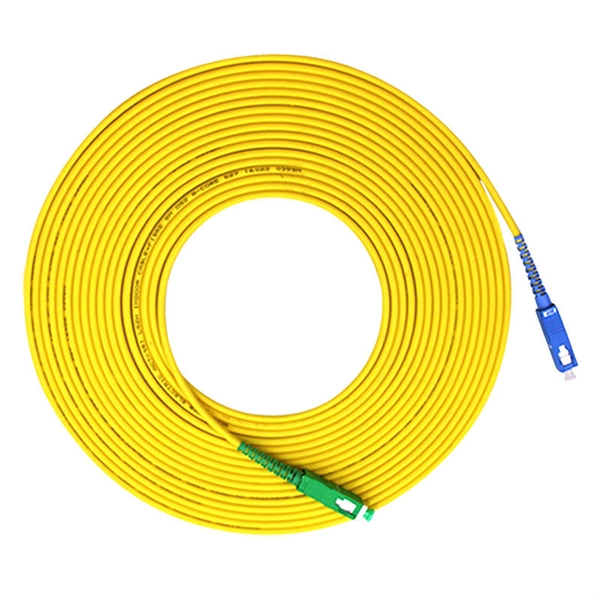
Fibre Channel
Fibre Channel is primarily used to connect computer data storage to servers in storage area networks (SAN) in commercial data centers. Fibre Channel
What is Fibre Channel? History, layers, components
However, Fibre Channel networks still can transport SCSI commands and information units using the Fibre Channel Protocol (FCP). It is designed to
Fibre Channel nodes
Fibre Channel nodes act as a protocol converter between the Fibre Channel and iSCSI protocols; this enables you to add Fibre Channel connectivity to any new or existing SolidFire cluster.
Fibre Channel architecture
Fibre Channel architecture provides various communication protocols on the storage system. The storage systems that are interconnected are referred to as nodes. Each node has one or more ports.
Basics of Fibre Channel Implementation
Node - Any endpoint for a Fibre Channel traffic (carrying information) can be considered as a Node. A node has a unique 64-bit identifier known as the
Fibre Channel Protocol
When a Fibre Channel node initializes, it examines its available memory space and determines how many incoming frames it can accommodate. It expresses this quantity as a number
Fibre Channel Functional Overview
Fundamentally, Fibre Channel allows two or more nodes to communicate by sending information units (IUs) to each other. This is accomplished by fragmenting the IUs into frames which are then sent
Inside a Modern Fibre Channel Architecture – Part 1
“The Fibre Channel Industry Association (FCIA) is a mutual benefit, non-profit, international organization of manufacturers, system integrators, developers, vendors, industry
The Foundations of Fibre Channel Architecture — Unveiling the
By far the most dominant and scalable model, switched fabric topologies use one or more Fibre Channel switches to connect multiple nodes in a mesh or core-edge design.
Dell Storage Comparison: PowerStore, PowerVault,
Discover the differences between Dell Storage solutions: PowerStore, PowerMax, PowerScale, Unity XT, VxRail & PowerVault. Compare models for AI, cloud,
4.4 Introduction to Fibre Channel (FC) SAN Architecture
Point-to-point Fibre channel arbitrated loop (FC-AL) Fibre channel switched fabric (FC-SW). Fibre Channel (FC) SAN Architectures The configuration of the above
Chapter 2. Fibre Channel Architecture
Fibre channel attempts to combine the best of these two methods into an I/O interface that meets the needs of both channel users and network users. Fibre channel communications can be conducted
The Foundations of Fibre Channel Architecture — Unveiling the
Fibre Channel architecture stands as one of the paramount pillars supporting contemporary enterprise data storage infrastructures. Its intricate design and robust performance enable storage area
Fibre Channel Functional Overview
Figure 1-3: Fibre Channel Concepts In the above scenario, Fibre Channel nodes are represented by a computer host and two storage devices. While storage devices usually boast built-in Fibre Channel
4.4 Introduction to Fibre Channel (FC) SAN Architecture
Fibre channel switched fabric (FC-SW). Fibre Channel (FC) SAN Architectures The configuration of the above 3 architectures are explained below
Fibre Channel Topologies
Switched fabric If Fibre channel switches are used, then it is called Switched fabric topology. In this topology, all devices are connected and communicated through
Overview of Fibre Channel | Junos OS | Juniper Networks
Fibre Channel (FC) is a high-speed network technology that interconnects network elements and allows them to communicate with one another. The International Committee for Information Technology
What are Fibre Channel port types?
What are Fibre Channel (FC) port types? A Fibre Channel port is a hardware pathway into and out of a node that performs data communications
Related Video Reference
This video was associated with the source search result. Verify technical details against current product documentation and project requirements.