
Technical notes
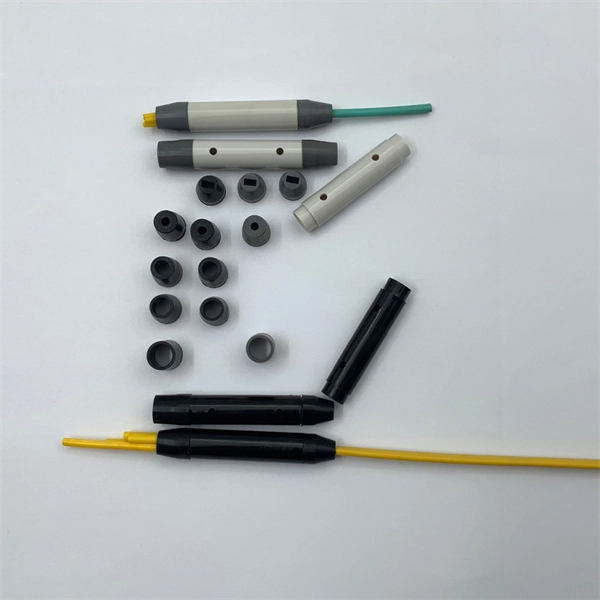
Fused Fiber Optic WDMs
We offer 2-wavelength fiber WDMs for UV/visible, visible, visible/NIR, or IR wavelengths, 3-wavelength fiber WDMs, 4-wavelength fiber WDMs, and polarization-maintaining fiber WDMs.
Fused Tapered Wavelength Division Multiplexer Market, By Application
The Fused Tapered Wavelength Division Multiplexer Market is analyzed across major global regions including North America, Europe, Asia-Pacific, Latin America, and the Middle East & Africa.
LBTEK-Single-Mode Wavelength Division Multiplexer
LBTEK''s single-mode WDMs are fabricated using fused biconical taper technology, with center wavelengths covering 488 nm to 2000 nm. They feature a wide
Fused Tapered Wavelength Division Multiplexer Market 2035
The Global Fused Tapered Wavelength Division Multiplexer Market is projected to grow at a CAGR of 9.3% from 2025 to 2035, driven by increasing demand for high-capacity bandwidth and data
IR, 2-Wavelength, Single Mode WDMs (≥980 nm)
Because of the large ±80 nm bandwidth at 1300 nm, this multiplexer is ideal for applications in life science imaging. Unlike other WDMs on this page, these
Fused Tapered Wavelength Division Multiplexer Market (2024-2034)
The fused tapered wavelength division multiplexers held the largest market share in 2024, accounting for approximately 65% of the global market. The growth of this segment is driven by the
Global Fused Tapered Wavelength Division Multiplexer Market 2025
Fused taper wavelength division multiplexer is an important optical fiber passive device and the basic device of wavelength division multiplexing system. It is widely used in optical fiber communication
Fused Wavelength Division Multiplexer(1310/1550nm)
Based on the proven Fused Biconic Taper (FBT) technology, these multiplexers provide broad operating wavelengths and low insertion loss. All our WDM are available with any connector style (FC as
Fused WDM 1310/1550nm
SENKO''s 1310/1550nm fused single-mode wavelength division multiplexers are manufactured using the proven fused biconical taper technology, this device is ideal for combining or separating optical
Guidelines for design and fabrication of fused fiber coupler based
The fused fiber coupler can be function as WDM (Wavelength Division Multiplexing). An analysis of the wavelength response of the fused fiber coupler is presented here. Both theoretical
High-Quality Fused WDMs
Designed to preserve fiber resources, fused WDM devices divide or combine different optical wavelengths in optical amplifiers. They operable at 980nm/1060nm wavelength range. VCHUNG''s
Fused WDM wavelength for Sale, Fused WDM Manufacturer/ Factory
Fused WDM Fused Biconic Taper Wavelength Division Multiplexing (Fused WDM) refers to a wavelength division multiplexer based on the fusion taper process. When the cores of the two single
Tech Note 26 How Fused Fiber Optic Couplers Work
This is how Newport''s F-WDM Wavelength Division Multiplexers are made. Note that these couplers are also bi-directional, capable of splitting the two wavelengths when used in the reverse direction
The Structure and Applications of Fused Tapered Fiber
Download Citation | The Structure and Applications of Fused Tapered Fiber Optic Sensing: A Review | Tapered optical fibers have continuously evolved in areas such as distributed
Fused Couplers / Splitters
Oplink Fused Couplers / Splitters Oplink Fused Couplers / Splitters include wideband fused fiber couplers, polarization-insensitive miniature circulators, and fused single-mode wavelength
An efficient taper shape model for fused optical fiber components
Abstract Thermally tapered optical fiber components such as couplers, wavelength division de/multiplexers require a precise analysis of the relationship between technological and
A Low-Loss Fused Biconical Taper Type Few-Mode Multiplexer
The multiplexer provides high coupling efficiency (>55% for the worst case) for the 4 spatial modes over the entire wavelength range of 1515-1590 nm. The all-fiber construction provides
Tunable and channel spacing precisely controlled comb filters based
Using fused taper technology to draw the fiber, we can precisely control the optical path difference between the two arms of the MZI, thus realizing a precisely controllable channel spacing.