Skip to content
PROMETHEASOPTICAL Send a project enquiry
Reference library

High-voltage switchgear relay protection

Published
  • High-Voltage
  • Switchgear
  • Relay
Source context

AI source overview

High-voltage switchgear relay protection ensures rapid, selective, and reliable fault detection and isolation to maintain system stability and safeguard equipment.

Principles of HV Relay Protection

Protective relaying in high-voltage networks is designed to detect electrical faults and isolate affected sections while keeping the rest of the system operational. Key principles include: Selectivity: Only the faulty section is disconnected, preventing unnecessary outages elsewhere in the network. Sensitivity: Relays detect even minor abnormal conditions that could escalate into major faults.

Speed: Rapid operation minimizes equipment damage and reduces fault clearance time. Reliability: Relays must operate correctly when needed and avoid false tripping. Simplicity and Economy: Systems should be easy to configure, maintain, and cost-effective.

Types of RelaysHigh-voltage switchgear employs various relay types depending on the application: Overcurrent Relays: Operate when current exceeds preset thresholds, commonly used for line and transformer protection. Distance (Impedance) Relays: Measure line impedance to detect faults and estimate fault location, ideal for long transmission lines. Differential Relays: Compare currents at two ends of a protected zone, widely used for transformers, generators, and busbars.

Directional Relays: Detect the direction of power flow, useful in meshed networks and for backup protection. Pilot Relays: Utilize communication channels (fiber optics, PLC, microwave) for coordinated protection of long lines. Numerical Relays: Multifunctional devices integrating metering, protection, communication, and event recording.

Protection Schemes

Relay protection schemes are structured to ensure primary and backup protection: Primary Protection: Fastest and closest to the fault, providing immediate isolation. Backup Protection: Acts if primary protection fails, can be local or remote. Zone Protection: Transmission lines are divided into zones (Z1, Z2, Z3) for selective fault clearance.

Unit vs Non-Unit Protection: Unit protection covers a defined element (e.g., transformer), while non-unit protection covers broader areas.

Pilot-

Aided Schemes: Use high-speed communication for coordinated protection across long distances.

Calculations and Settings

Accurate calculations and settings are critical for effective relay operation: Current and Voltage Sensing: Determines relay sensitivity based on expected load and fault currents. Fault Level Calculations: Symmetrical and asymmetrical fault currents are analyzed for proper relay thresholds.

Time-

Dial Settings: Configure overcurrent relays to coordinate with downstream devices, ensuring selective tripping. Coordination Studies: Ensure relays operate in the correct sequence to isolate faults without affecting healthy sections.

Advanced Considerations

Modern H

V relay protection integrates numerical relays, smart relays, and multifunctional devices to enhance reliability, reduce maintenance, and improve fault analysis. Arc flash mitigation, event recording, and communication-enabled pilot schemes are increasingly standard in high-voltage substations. SummaryHigh-voltage switchgear relay protection combines principled design, appropriate relay selection, precise calculations, and coordinated schemes to ensure rapid, selective, and reliable fault isolation.

By leveraging modern numerical and pilot-aided relays, utilities can maintain system stability, protect critical assets, and optimize operational efficiency.

Research context

Reference summary

Protective Relaying in High Voltage Networks: Explore principles and configurations of protective relaying in high voltage systems. Ensure fast, selective.

From reference to enquiry

Questions for your project

Use these editorial prompts alongside the linked excerpts. They identify items to confirm for your project.

Technical notes

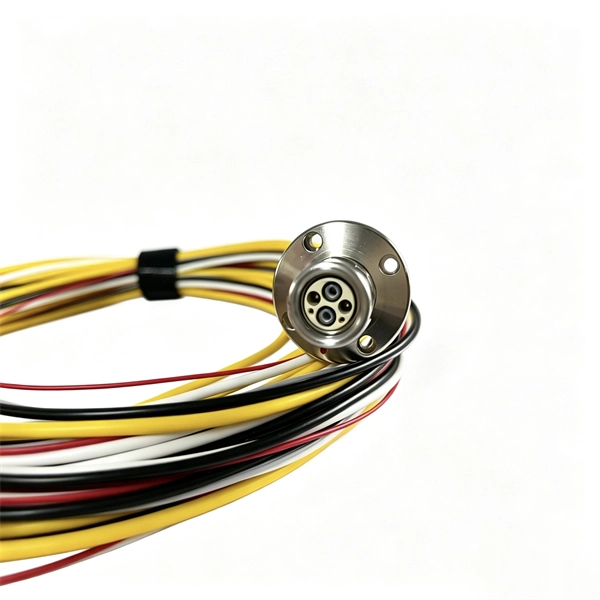
Illustrative equipment image

Protective Relaying in High Voltage Networks:

Explore principles and configurations of protective relaying in high voltage systems. Ensure fast, selective fault clearance per IEC/IEEE standards.

Protective Relaying in High Voltage Networks:

This article delves deeply into the principles, types, and configurations of protective relaying in HV networks, aligning with global

Protective Relays

Protect critical components in your power system with a wide range of SEL protective relays covering applications and use cases from low to high-voltage

Basic protection relay knowledge

A fast and selective arc fault mitigation for air-insulated LV & MV switchgear and Relion protection and control relays and sensor technology protect staff and plant facilities for many years.

Protection relays

Numerical relays are based on the use of microprocessors. Numeric relays are programmable. Most numerical relays are also multi-functional.

High Voltage Switchgear (HV/HT): Types, Components & Working

High voltage (HV) switchgear is a combination of electrical disconnects, fuses, circuit breakers, and relays designed to monitor, control, and protect high-voltage circuits.

Power System Protective Relays: Principles & Practices

Protective relays and devices have been developed over 100 years ago to provide “last line” of defense for the electrical systems. They are intended to quickly identify a fault and isolate it so the balance of

Protective Relays: Types, Working Principle & Uses

These instrument transformers let the relay monitor high-voltage or high-current equipment using safer secondary signals. The accuracy, polarity,

Protection Relays | Medium & high voltage power system protection

Discover protection relays for generators, motors, transformers, feeders and busbars, designed for reliable and efficient power system protection.

Relay Protection in HV/MV Substations: Calculations, Settings

This comprehensive article delves into the key aspects of relay protection in HV/MV substations, including calculations, settings, coordination, selection, and validation, which are all...

Power Engineering Course: Relay Control and

Learn how to analyze and set relay control and protection for low- and high-voltage switchgear and substations from beginner to expert level.

HT Switchgears: Meaning, Types, Components & Working

These systems consist of protective devices like high voltage circuit breakers, disconnect switches, and relays that detect faults and provide safe circuit

Relay Protection in HV/MV Substations: Calculations, Settings

Introduction Relay protection is essential to ensure the stability, reliability, and safety of electrical power systems. In HV (High Voltage) and MV (Medium Voltage) substations, relay

Electrical Protection Schemes Based on High Voltage Switchgear

High voltage switchgear is the protection scheme for controlling, measuring, and regulating electrical quantities in a power system with a voltage rating exceeding 36kV.

High Voltage Relays Selection Guide: Types, Features

High voltage relays must be designed to switch larger loads and handle high in-rush currents. This requires careful consideration of the relay''s load switching capability and the use of

High Voltage Switchgear (HV/HT): Types, Components & Working

High Voltage Switchgear (HV/HT), often referred to as HV (High Voltage) or HT (High Tension) switchgear, is a vital part of modern power systems. It operates at voltages above 36 kV

Types of Electrical Protection Relays or Protective Relays

Key learnings: Protective Relay Definition: A protective relay is an automatic device that senses abnormal conditions in electrical circuits and triggers actions to isolate faults. Types of

Protection relays

Protection relays Numerical relays are based on the use of microprocessors. The first numerical relays were released in 1985. A big difference between

Related Video Reference

This video was associated with the source search result. Verify technical details against current product documentation and project requirements.

Share your network requirements

Share the fiber interfaces, termination capacity, cable route and evidence required for handover.

Send a project brief