
Technical notes
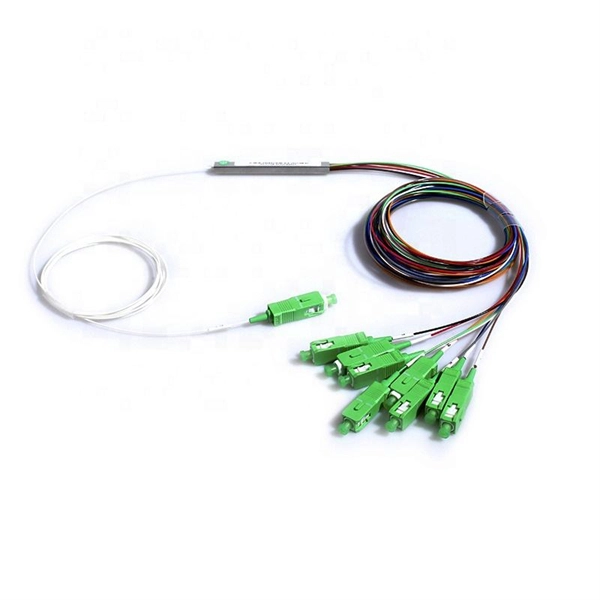
Several Steps For On-site Cable Reel Testing
Single reel inspection work includes: checking, counting, appearance inspection and measurement of the specifications and quantity of optical cables
Field Test Procedure for Optical Fibre Link Measurements
After fiber optic cables are installed, spliced and terminated, they must be tested. For every fiber optic cable plant, you need to test for continuity and polarity, end-to-end insertion loss and then
Guidelines Corning Recommended Fiber Optic Test
1 Testing Tier 2 testing involves the use of an optical time domain reflectometer (OTDR) to provide a trace (visual picture) of the installed fiber optic network . Figure 2). The wavelength(s) used for
The FOA Reference For Fiber Optics
See the Test section of the FOA Online Guide for much more detail. After fiber optic cables are installed, spliced and terminated, they must be tested. For every fiber optic cable plant, you need to test for
The FOA Reference For Fiber Optics
Often, it is necessary to test a spool of cable prior to installation to ensure it has not been damaged. This may involve either a quick continuity check or measurement of the actual loss.
Demystifying Fiber Test Methods – Back to Basics
Effective fiber testing utilizes advanced tools such as Optical Loss Test Sets (OLTS), Optical Time-Domain Reflectometers (OTDR), and Visual Fault Locators (VFL) to diagnose and correct issues,
How to Test a Fiber Optic Cable: Best Methods & Tools
Want to know how to test a fiber optic cable? We''ll look at the most common fiber testing methods and how to use them properly.
How to Test Fiber Optic Cable — Field Testing & OTDR Guide | Fiber
How to test fiber optic cable in the field. Insertion loss testing, OTDR basics, visual fault locators, and pre-show testing procedures.
Fiber Testing Best Practices
Measure the loss to ensure your TRCs are good (≤ 0.15 dB for MM, ≤ 0.25 dB for SM) and save the test. Disconnect at the bulkhead adapter and connect to the link under test and measure the loss. An
Fiber Optic System Testing Tutorial
When a fiber optic system is successfully tested and determined to meet the customer''s specific requirements and relevant industry standards, the system performance and individual links can be
Everything you need to know about Fiber Optic Testing
Fiber Optic Tutorial presented by LANshack . Learn about fiber optic basics, fiber, jargon, cable, termination, network, estimation, testing, training, and glossary.
FOA Fiber U Quickstart Guide: Fiber Optic Testing With OTDRs
Fiber Optic Testing With Optical Time Domain Reflectometers - OTDRs This is your "QuickStart" guide to testing fiber optic cable plants with an OTDR. We''ll give you the basic information you need and
The FOA Reference For Fiber Optics
Testing Bare Fiber There are two reasons we may want to test bare fiber, by that we mean fiber that has not been terminated in connectors but is simply plain optical
Fiber Testing | Fiber Optic Cable Testing Methods & Top Tools
Fiber Optic Testing Fiber testing encompasses the processes, tools, and standards used to test fiber optic components, fiber links, and deployed fiber networks. This includes optical and mechanical
Fiber Testing Best Practices
Testing plays a key role in ensuring the fiber optic cables that make up the network are running efficiently. Controlling network loss is becoming an increasingly important task for network engineers
A Guide to Fiber Optic Testers, Tools, and Troubleshooting | Fluke
Learn about the common contaminants of fiber optics in today''s mission critical networks and get a detailed look at fiber testing and types of fiber testers to ensure network performance.
Fiber Optic Cable Testing: A Complete Guide to
Fiber optic cables are the backbone of high-speed data networks, but even the most advanced fiber optic infrastructure can fail if not properly tested
Fiber Optic Cable Testing OTDR Testing Procedure
Testing Procedures Fiber Optic Cable Testing OTDR Testing Procedure Test Fiber Optic Cable shall include Optical Time Domain Reflectometer (OTDR) tests, Coarse Wave Division
Related Video Reference
This video was associated with the source search result. Verify technical details against current product documentation and project requirements.