Skip to content
PROMETHEASOPTICAL Send a project enquiry
Reference library

Important Considerations When Selecting an Optical Module

Published
  • Important
  • Considerations
  • Selecting
Source context

AI source overview

Selecting the right optical module requires careful evaluation of transmission distance, data rate, wavelength, connector type, power consumption, optical loss, compatibility, and future scalability.

Transmission Distance and Fiber Type

Optical modules are designed for specific transmission distances.

Short-

Range (SR) modules are suitable for distances up to 300 meters over multimode fiber (MMF), Long-Range (LR) modules support up to 10 kilometers over single-mode fiber (SMF), and Extended Range (ER) modules are used for distances beyond 10 kilometers. Multimode fibers are ideal for short-distance applications due to lower cost and ease of installation, while single-mode fibers are preferred for long-distance links because of lower optical loss.

Data Rate and Scalability

Choose a module that matches your network's data rate requirements, such as 1G, 10G, 25G, 40G, 100G, or 400G. Consider future bandwidth growth; modules like QSFP28 (100Gbps) or QSFP56/OSFP (400Gbps) can help future-proof your network. Ensuring modular expansion capability allows your infrastructure to scale without replacing existing hardware.

Wavelength and Connector Type

Wavelength selection depends on distance and fiber type: 850nm for short-range MMF, 1310nm for medium-range SMF, and 1550nm for long-range high-performance SMF applications. Connector types such as LC are standard for single-mode and multimode fibers, while MPO/MTP connectors are used in high-density data center environments.

Power Consumption and Thermal Management

Ensure the module's power consumption aligns with your network's power budget and thermal management capabilities. High-power modules may require additional cooling or power considerations to maintain reliability.

Optical Loss and Receiver Sensitivity

Optical loss refers to signal attenuation during transmission, measured in decibels (dB). High optical loss can degrade signal quality and cause errors. For short distances, multimode fibers with SFP or SFP+ modules are sufficient, while long-distance links require single-mode fibers paired with LX or ER modules for lower loss.

Receiver sensitivity, influenced by photodetector type (PIN or APD), also affects performance, with APDs offering 6–10 dB higher sensitivity than PIN photodiodes.

Internal Components and Monitoring

Optical modules integrate key components: TOSA (Transmitter Optical Sub-Assembly): Converts electrical signals to optical signals using laser diodes or LEDs.

ROS

A (Receiver Optical Sub-Assembly): Converts optical signals back to electrical signals, using photodetectors, TIAs, and post-amplifiers.

PCB

A (Printed Circuit Board Assembly): Houses active and passive electronics ensuring module functionality.

DD

M (Digital Diagnostic Monitoring): Provides real-time monitoring of voltage, temperature, transmitted/received power, and laser bias current, ensuring reliable operation and interoperability.

Compatibility and Standards

Verify that the module is compatible with your network equipment. Incompatibility can result in ports remaining down or error messages, even if the module physically fits. Adhering to standards like SFF-8472 ensures interoperability across vendors.

Summary

When selecting an optical module, consider: Transmission distance and fiber typeData rate and future scalabilityWavelength and connector typePower consumption and thermal managementOptical loss and receiver sensitivityInternal components (TOSA, ROSA, PCBA) and monitoring (DDM)Compatibility with network equipment and adherence to standards Careful evaluation of these factors ensures reliable, high-performance optical communication and prepares your network for future growth.

Research context

Reference summary

How to Choose the Right Optical Transceiver Module for You in 2025Whether you're looking to expand your network, upgrade existing infrastructure, or future.

From reference to enquiry

Questions for your project

Use these editorial prompts alongside the linked excerpts. They identify items to confirm for your project.

Technical notes

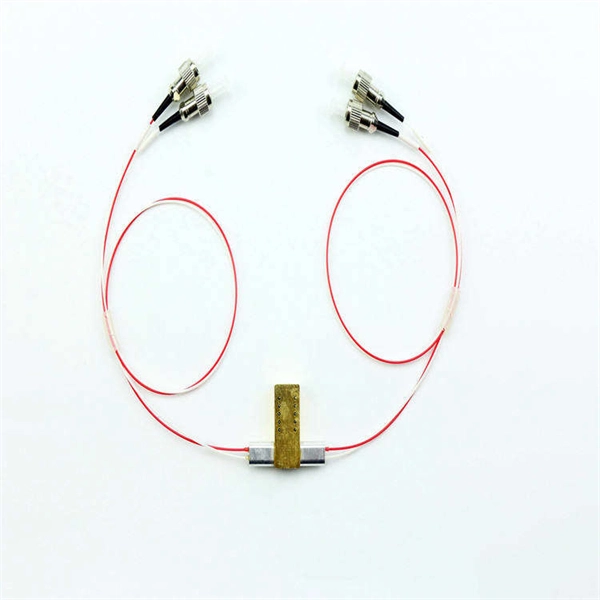
Illustrative equipment image

How to Choose the Right Optical Transceiver Module for You in 2025

Whether you''re looking to expand your network, upgrade existing infrastructure, or future-proof your system, it''s important to consider the transmission distance, data rate, wavelength, and

Key Factors to Consider When Selecting Optical Transceivers

When selecting optical modules, key considerations include bit error rate, compatibility, power consumption, and the manufacturer''s overall capabilities.

Key Factors to Consider When Selecting an Optical Module for a

Selecting the right optical module is crucial for ensuring optimal performance, reliability, and cost-effectiveness in your network infrastructure. Here are the key factors to consider when

The Most Comprehensive Guide Of Optical Modules

Explore the ultimate guide to optical modules. Learn types, functions, performance metrics & how to choose the right module for your fiber network.

How to Choose Optical Modules Correctly?

Selecting an optical module requires consideration of transmission speed, environment, connector type, fiber type, transmission distance, wavelengths, transceiver type, MSA and IEEE

Considerations when Selecting the Right Transceiver

Selecting the right optical transceiver is one of the most important decisions you''ll make when designing or upgrading your network. It''s not just about plugging in a module that fits; the

Understanding Optical Transceiver Modules: A Comprehensive Guide

When you pick up an optical transceiver module, several parameters need to be defined to ensure compatibility and efficiency. These include physical dimensions, interface types, spectral

Ultimate Guide to 1G SFP Module Selection

Learn how to choose the right 1G SFP module for your network. Our guide covers compatibility, distance, fiber type, cost, and vendor selection for optimal performance.

How to choose the right optical transceiver for your network?

The optical modules you select should be compatible with your existing networking equipment like routers and switches. Also, ensure to choose the appropriate type of connectors for

Optical Module Guide: Demystifying Optical Modules and Their Uses

Choosing the appropriate optical module involves considering several factors: Data Rate Requirements: Determine the speed your network needs, such as 1 Gbps, 10 Gbps, or higher.

What Are the Key Parameters of Optical Modules

Understand the key parameters of optical modules, including transmission rate, distance, wavelength, and fiber compatibility, for better

TI DLP® System Design: Optical Module Specifications

ABSTRACT The objective of this application note is to help product developers better understand optical module specifications and related system design considerations. This information helps expedite

An Ultimate Guide for Selection of Fiber Optic Cables and Connectors

Since cables and connectors are essential elements of a fiber-optic network, it is important to select the right types of cables and connectors for specific applications. However, the selection of these two

8 Tips on Choosing the Right Optical Transceiver

8. NADDOD''s Tips on Choosing Optical Transceivers for High-speed Networking When selecting third-party transceivers for high-speed networks like InfiniBand and RoCE, consider these

What Is An Optical Module?

An optical module converts electrical signals to light for fast, reliable data transfer in networks, essential for cloud computing, telecom, and data centers.

Optical Module Guide: Demystifying Optical Modules

Optical modules are essential components in modern communication networks, enabling high-speed data transmission over fiber optic cables. As the

Understanding and Selecting Optical Fibre and Cable

OPTICAL FIBRE AND CABLE This document will provide an understanding of optical fibre, optical fibre cable (OFC), application standards, and key considerations that one should make before selecting

The key points for optimizing the performance of optical modules

This article discusses the performance metrics for optical modules and how to achieve higher transmission speeds for optical modules.

Related Video Reference

This video was associated with the source search result. Verify technical details against current product documentation and project requirements.

Share your network requirements

Share the fiber interfaces, termination capacity, cable route and evidence required for handover.

Send a project brief