
What is the current Laser Diode Market size?
The Laser Diode Market is projected to register a CAGR of 11.20% during the forecast period (2024-2029) Read More
Search optical fiber, connectivity, cable management and network infrastructure references.
They have many different applications, for example soldering, plastic welding or metal cutting. In addition, only little repair and maintenance is needed, since the laser diodes are very robust and. Blue laser diodes, characterized by their shorter wavelengths, offer...
[PDF Version]
Laser diodes are the most common type of lasers produced, with a wide range of uses that include fiber-optic communications, barcode readers, laser pointers, CD / DVD / Blu-ray disc reading/recording, laser printing, laser scanning, and light beam illumination. A laser diode...
[PDF Version]
Barbados Laser Diode Market (2025-2031) | Trends & Outlook Growth6Wresearch actively monitors the Barbados Laser Diode Market and publishes its comprehensi.
[PDF Version]The Laser Diode Market is projected to register a CAGR of 11.20% during the forecast period (2024-2029) Read More
Coherent Inc., IPG Photonics Corporation, OSRAM Opto Semicobductor GmbH (OSRAM GmbH), Trumpf Inc. and Cutting Edge Optronics Inc. (Northrop Grumman...
Asia Pacific is estimated to grow at the highest CAGR over the forecast period (2024-2029). Read More
Laser Diode Market Size and Outlook Report 2026 to 2035Global Laser Diode market size is expected to reach $15.47 billion by 2030 at 10.5%, increasing ev a.
[PDF Version]The Laser Diode Market is projected to register a CAGR of 11.20% during the forecast period (2024-2029) Read More
Coherent Inc., IPG Photonics Corporation, OSRAM Opto Semicobductor GmbH (OSRAM GmbH), Trumpf Inc. and Cutting Edge Optronics Inc. (Northrop Grumman...
Asia Pacific is estimated to grow at the highest CAGR over the forecast period (2024-2029). Read More
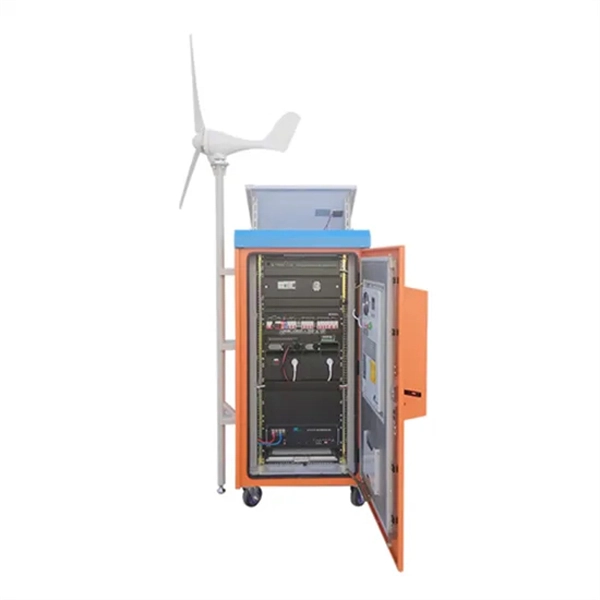
The working principle of a laser diode is based on stimulated emission and population inversion within a forward-biased semiconductor p-n junction. When sufficient current flows, more electrons occupy the excited state than the ground state (population inversion). Unlike...
[PDF Version]Advantages of Laser DiodeWhen a laser diode is compared with other light-emitting devices, the operational power is less in the laser diode.The tre...
The laser diode is defined as follows:Monochromatic: A small width of emitted narrow light that has just one colour.Well-directed: The light will b...
Laser diodes are classified as follows:Heterostructured laser diode: A heterostructured material is one that is sandwiched between two n-type and t...
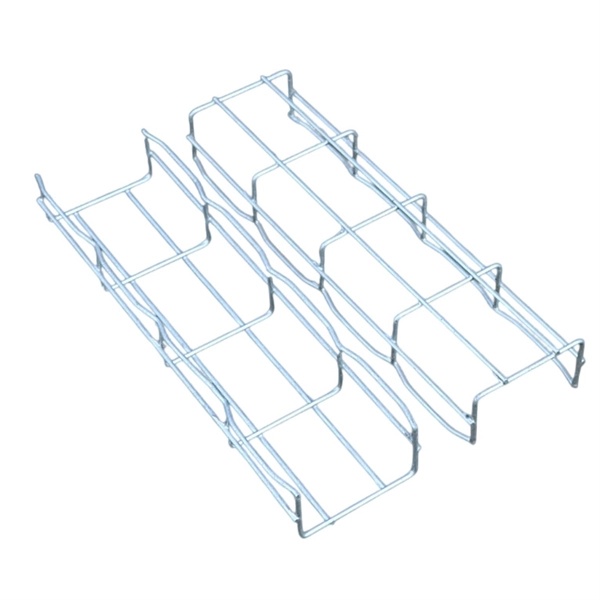
These diodes offer unparalleled advantages in data transmission, bolstering the efficiency of communication networks. As photodiodes respond better to longer wavelengths and red laser diodes are significantly cheaper than other colors, they are also used extensively for...
[PDF Version]
Rapid proliferation of high-power laser diodes in autonomous vehicle technologies. Emergence of renewable energy applications. High initial. Market Forecast By Wavelength (Infrared Laser Diodes, Red Laser Diodes, Blue Laser Diodes, Blue Violet Laser Diodes, Green Laser...
[PDF Version]
Laser diodes are numerically the most common laser type, with 2004 sales of approximately 733 million units, as compared to 131,000 of other types of lasers. Laser diodes are widely used in as easily modulated and easily coupled light sources for communication. They are used...
[PDF Version]
Wireless networks are built on fiber optics. Here is an explanation of how telephone systems have evolved to use fiber optics for most connections, right out to the antennas on cell towers that your mobile phone connects to. A fiber-optic cable, also known as an optical-fiber...
[PDF Version]
Zinc aluminum magnesium cable trays are primarily utilized for supporting and organizing electrical wiring and cables. The composite material consists of zinc, aluminum, and magnesium, which gives it superior corrosion resistance compared to traditional galvanized steel. This...
Share the fiber interfaces, termination capacity, cable route and evidence required for handover.