Skip to content
PROMETHEASOPTICAL Send a project enquiry
Reference library

Low Loss BERT Bit Error Rate Tester for IoT

Published
  • Low
  • Loss
  • Bert
Source context

AI source overview

Low-loss Bit Error Rate Testers (BERTs) are essential for ensuring reliable IoT communication by measuring signal integrity and detecting bit-level errors in both lab and field environments.

Overview of BER

T for IoTA Bit Error Rate Tester (BERT) evaluates the quality of digital communication links by sending a predefined data stream through a network and measuring the number of bits received incorrectly compared to the total transmitted bits. This is critical for IoT devices, which often operate over wireless, optical, or wired networks where low signal loss and high reliability are required.

Key Features for Io

T BERTsLow Insertion Loss and High Signal Integrity: Modern BERTs, such as those from Bitwise Labs, allow precise measurement of return loss and insertion loss, helping engineers identify weak points in IoT communication paths.

Multi-

Channel Testing: Devices like OptoBERT OPB-BERT-400G-P8 support up to eight channels simultaneously, enabling testing of multiple IoT nodes or high-density sensor networks. Compact and Portable Units: Handheld or small-form-factor BERTs, such as VIAVI T-BERD/MTS series, are suitable for field deployment in IoT networks, allowing technicians to perform on-site testing without disrupting operations. Pattern Generation and Error Analysis: BERTs use Pseudorandom Binary Sequences (PRBS) to stress-test links, accelerating error detection and providing detailed BER statistics for IoT devices.

Compatibility with Optical and Electrical Links: Many BERTs support both fiber optic and electrical interfaces, making them versatile for IoT applications that use mixed communication technologies. Applications in IoTNetwork Certification: Ensures that IoT gateways, sensors, and actuators meet required BER thresholds for reliable operation. Field Deployment Testing: Portable BERTs allow utilities and industrial IoT operators to test communication links in real-world conditions, identifying latency spikes or timing mismatches.

R&

D and Manufacturing: BERTs are used to validate new IoT modules, transceivers, and subsystems during development and production, ensuring low-loss performance and high reliability.

Performance Metrics

Bit Error Rate (BER): Typical acceptable BER for IoT networks ranges from 10-9 for general communications to 10-13 for high-reliability data links. Insertion Loss and Return Loss: Low-loss BERTs measure these parameters to ensure minimal signal degradation across IoT communication channels. Latency and Timing Accuracy: Advanced BERTs can detect timing mismatches, which is critical for synchronized IoT networks like SCADA or smart grid systems.

Recommended SolutionsVIAVI T-BERD/MTS Series: Handheld, multi-protocol, and suitable for field and lab testing.

Data Center Test Portable BER

Ts: Proven in utility IoT deployments for high-speed fiber and copper links. OptoBERT OPB-BERT Series: Compact, multi-channel, and supports high-speed electrical and optical testing for R&D and manufacturing.

Bitwise Labs BE

R Tools: Focused on precision low-loss testing, signal integrity, and TDR correlation for IoT system optimization. Using a low-loss BERT ensures that IoT networks maintain high reliability, minimal data errors, and optimal performance, which is especially important for mission-critical applications in industrial, utility, and smart city deployments.

Research context

Reference summary

BERT BERT - Bit Error Rate Tester Anritsu is a world leader in Bit Error Rate test and measurement products. These products reflect that global leadership.

From reference to enquiry

Questions for your project

Use these editorial prompts alongside the linked excerpts. They identify items to confirm for your project.

Technical notes

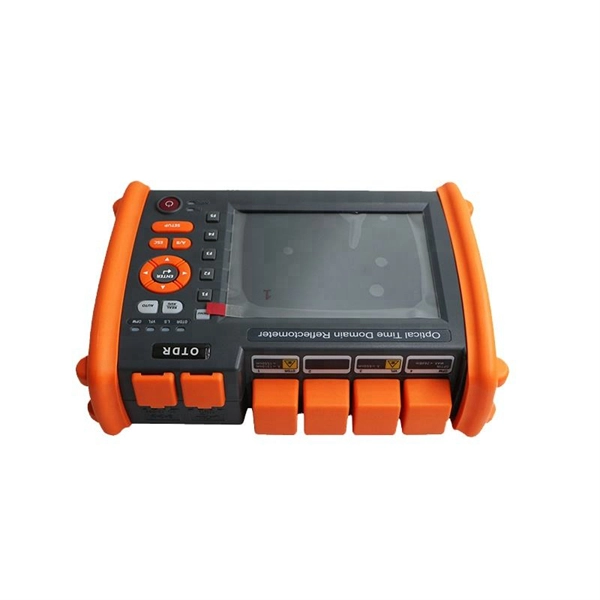
Illustrative equipment image

Precision BER and STEPScope TDR Signal Integrity

Our Bit Error Rate (BER) products support comprehensive Bit Error Rate Test functionality, including locating Bit Errors and correlating them to data patterns

Bit Error Rate Testers – Data Center Test

Need real-time accuracy testing and error diagnostics for your utility network? Reach out to Data Center Test for customized BERT solutions, demos, or expert guidance.

Bit Error Ratio Testers | Keysight

Learn how to tune and calibrate a bit error ratio tester''s (BERT) stress signal amplitude, channel equalization, and insertion loss to achieve accurate stress conditions required for conformance testing.

Bit Error Rate Tester

Choose from a selection of single and multi-channel Bit Error Rate Tester models based on your specific testing application.

QBERT™ Bit Error Rate Tester

Features and specifications for QBERT™, our next-generation bit error rate tester. Verify your system configuration and performance. Portability and simplicity make QBERT™ an ideal replacement for

BERT — Multilane

This setup can be used for multiple testing purposes, such as to evaluate the performance of a transmitter, a receiver, or an optical link. MultiLane supports

Bit-error-rate testers | EXFO

EXFO''s Bit Error Rate Testing solutions (BERT) enable the accurate physical-layer design verification of high-speed communications. Discover them today!

Bit-Error-Rate Testers – Optellent

The OPTELLENT OptoBERT™ OPB5000 is a cost-effective easy-to-use bit-error-rate tester (BERT) for testing datacom ICs, devices, components, modules and systems in R&D and manufacturing

Bit-error-rate testers | EXFO

Bit-error-rate testing A bit error rate test (BERT) typically requires a test pattern generator and a receiver set to the same pattern. They can be used in pairs, with one at either end of a link, or singularly at

Bit-Error-Rate Testers – Optellent

OptoBERT™: Electrical and Optical & Bit-Error-Rate Testers (BERTs) The OptoBERT family of BERTs offers the best value in the industry for bit-error-ratio testing of optical and electrical components,

Bit Error Rate Testers – Data Center Test

Modular or handheld BERT test units Ethernet Testers – used to validate modular or portable BERT performance across data transmission systems. Multi-rate support: 1G, 10G, 25G, 40G, 100G SFP+

What is a Bit Error Ratio Tester (BERT)?

What Does a BERT Measure? When you transmit data from one location to another, there are errors introduced due to a variety of factors including signal to noise, distortion, and jitter.

Bit Error Ratio Testers

Keysight''s bit error ratio test (BERT) system enables the most accurate physical-layer design verification of high-speed communication and multi-gigabit digital

Bit Error Rate Testing

BERT generates a specific pattern on to the egress data stream of a E1/T1 controller and then analyzes the ingress data stream for the same pattern. The bits that do not match the expected pattern are

BERT (Bit Error Rate Tester) and Its Role in High-Speed

Conclusion Using a BERT for testing is essential for validating the performance and reliability of high-speed digital communication systems. It provides a quantitative measure of data

Bit Error Rate Tester (BERT)

Generates/Detects digital bit patterns for analyzing, evaluating and troubleshooting digital communications systems Operates at speeds from DC to 52 MHz Programmable polynomial length

Bit Error Rate Testing (BERT) Reference Example

This is done for the large number of errors that occur. Hardware Setup This reference architecture uses the NI PXI-6552 to conduct the BERT test. The hardware-compare feature on the

Explaining those BER testing mysteries | Lightwave Online

Most bit errors in real systems are the result of random noise and therefore occur at random times as opposed to an evenly distributed rate.

Related Video Reference

This video was associated with the source search result. Verify technical details against current product documentation and project requirements.

Share your network requirements

Share the fiber interfaces, termination capacity, cable route and evidence required for handover.

Send a project brief