
Technical notes
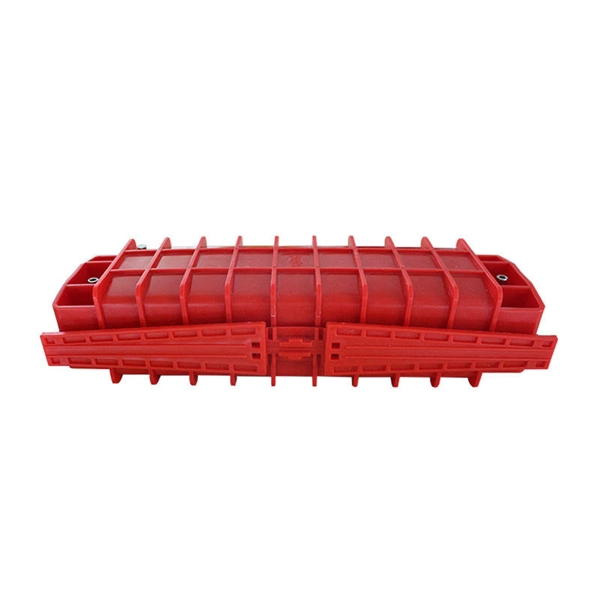
Optical Fiber Splicing: The Complete Technical Guide to Methods
Poor fiber splicing, on the other hand, can lead to performance issues and increased maintenance costs. This guide breaks down the fundamentals of optical fiber splicing, compares
Fiber Optic Splicing: Examining the Factors that Affect Splice
The performance of a fiber optic splice is determined by a number of factors, including the quality of the fiber, the cleanliness of the splice, and the techniques used to make the splice.
Fiber Optic Testing Standards
If more than 10% of the fibers are not within specification, the fiber will be cut back 10 feet and re-spliced. While not a requirement for initial field splicing, Contractors should verify reflectance measurements
ITU-T Rec. L.12 (03/2008) Optical fibre splices
Since the optimal splice conditions (arc current, arc time, etc.) may depend on both the characteristics of the type of fibre as well as the characteristics of the splicing machine, it is recommended to use an
The FOA Reference For Fiber Optics
After fiber optic cables are installed, spliced and terminated, they must be tested. For every fiber optic cable plant, you need to test for continuity and polarity, end
Fibre Splicer Quality Testing: Tools and Techniques
While visual inspection ensures fibres are physically ready for splicing, performance testing tools validate the optical quality of the splice itself. These tools are
7. Splice Measurement and Characterization
As we have seen, the quality of a fusion splice depends on a variety of charac-teristics such as mechanical strength, reliability, reflectance, and transmission loss. In this chapter we review
Evaluation of splicing quality in few-mode optical fibers
We propose a method to evaluate the splicing quality for few-mode fibers. A fusion fault detection system for few-mode fiber has been constructed, using OTDR technology, combined with
Optical Performance Analysis of Single-Mode Fiber Connections
optical fiber connections with a gap between the fiber ends. An analysis of the reflection coefficient caused by a gap between fiber ends is based on multiple reflections behaving like a Fabry-Perot interfer
Application Note_Splicing & OTDR Measurements
This Application Note explains all aspects of fusion splicing on Draka single-mode products, ESMF and BendBright-XS. This includes the testing of spliced fibers.
Guidelines Corning Recommended Fiber Optic Test
Introduction This paper explains the recommended guidelines for testing an installed fiber optic system. Fiber optic testing of a newly installed system not only verifies that the system meets its design
Fiber Optic Splicing & Termination | Expert Techniques
Learn about fiber optic splicing & termination, including fusion vs. mechanical splicing, termination methods, and best practices to ensure network reliability.
Fiber Optic Cable Splicing: The Art and Science of
Introduction In the world of fiber optic networks, splicing is a crucial process that connects fibers together to form a continuous, high-performance
What is Optical Fibre Splice Loss?
The portion of the optical power that does not pass through the splice and is radiated out of the fibre is referred to as splice loss. Learn about Optical
Learn Fiber Optic Splicing: All You Need to Know
Fiber Optic Splicing Advantages The advantages of fiber optic splicing go well beyond just better signal quality. By carefully connecting fiber
Fiber-Optic Cable Splicing
Fiber-Optic Cable Splicing The article discusses the methods, tools, and challenges involved in fiber-optic cable splicing, including fusion splicing, cleaving, and
Fiber Optic Cable Splice: The Most Complete Guide
Fiber optic cable splicing stands as the foundational skill enabling this vision, expertly uniting fiber strands to maintain flawless signal transmission. Essential for mending faults or scaling
Fibre Splicer Quality Testing: Tools and Techniques
When this happens, splice quality suffers — and so does network performance. While some calibration issues are easy to miss at first, there are a few clear