
Technical notes
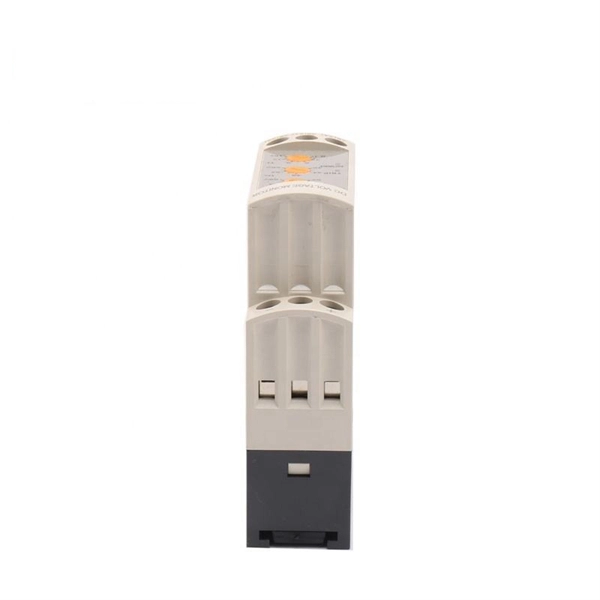
Understanding Protection Relays
Now, let us see the first type of overcurrent relay – 50. 50 is the ANSI device number, which is denoted for instantaneous overcurrent. This relay has a fixed and a very minute time delay
Understanding Protection Relays: 50, 50N, 51, and 51N
Protection relays are essential for ensuring electrical system safety and reliability. Here''s a quick summary of four key relay functions every protection engineer should understand: Responds
50/51N Protection Relay: Instantaneous & Time Overcurrent Ground
50N is instantaneous overcurrent on neutral—it trips immediately when current exceeds pickup. 51N is time overcurrent on neutral—it operates after a time-current characteristic curve,
Over Current Relay Working Principle, Types and Applications
Over Current Relay (50/51) Definition: An Overcurrent Relay (OCR) is a protective relay that operates when the current exceeds a predetermined value (pickup current).
Applications and Characteristics Of Overcurrent Relays (ANSI 50, 51)
Most microprocessor-based units will also have an adjustable delay for the 50 function; when an intentional time delay is added the 50 is referred to as a definite-time overcurrent function.
Protection Relay
It comprises a phase overcurrent function associated with direction detection, and picks up if the phase overcurrent function in the chosen direction (line or busbar) is activated for at least
Over current/Earth fault Relays [50/51]: Numerical Relays
Instantaneous Over current Protection (50): This is typically applied on the final supply load or on any protection relay with sufficient circuit impedance between itself and the next
Understanding 50, 50N, 51, and 51N protection relays
Here''s a quick summary of four key relay functions every protection engineer should understand: 50 - Instantaneous Overcurrent Relay: Responds instantly to overcurrent without delay.
Instantaneous Overcurrent Protection (ANSI 50) | Working Principle
This article introduces the working principle of Instantaneous Overcurrent Protection, explains its function, and summarizes the calculation of Instantaneous Overcurrent Protection settings.
Instantaneous and Time-overcurrent (50/51) Protection
How Does Instantaneous and Time-Overcurrent Protection Work? Overcurrent protection prevents damage from the overheating of critical components and
Understanding 50, 50N, 51, and 51N protection relays
Understanding Protection Relays: 50, 50N, 51, and 51N Protection relays are essential for ensuring electrical system safety and reliability. Here''s a quick summary of four key relay functions
Exploring the Significance of Protection Relays: Understanding 50,
Introduction: Protection relays are essential for maintaining the reliability and safety of electrical systems. The 50, 50N, 51, and 51N relays retain a special place among the various relay
Overcurrent Protection (50/51)
These relays can replace the following GE electromechanical & static relay types that require a time overcurrent range of 0.5-15.9 Amps and an instantaneous overcurrent range of 1-159 Amps:
Difference between Relay 50 and Relay 51N?
A distribution feeder has a Relay 51N set to trip at 1.5 times the rated current with a 5-second delay. If a ground fault occurs, the relay detects the overcurrent and trips the circuit breaker
Forward to the Basics: Selected Topics in Distribution Protection
Through analysis of event reports recorded by relays, this paper will present several examples of settings that led to unintended operation of distribution protection, including transformer delta-winding
Overcurrent Protection Relay – Electrical Engineering
Relay protection against the high current was the earliest relay protection mechanism to develop. From this basic method, the graded overcurrent relay protection system, discriminative short circuit
Power System Protective Relays: Principles & Practices
Abstract: Protective relays and devices have been developed over 100 years ago to provide “last line” of defense for the electrical systems. They are intended to quickly identify a fault and isolate it so the
Overview of ANSI 50/51 Relays
ANSI 50 relays operate instantaneously on overcurrent detection, while ANSI 51 relays have adjustable time-current curves. Microprocessor relays offer multiple standard curves and adjustable settings.
Related Video Reference
This video was associated with the source search result. Verify technical details against current product documentation and project requirements.