
Technical notes
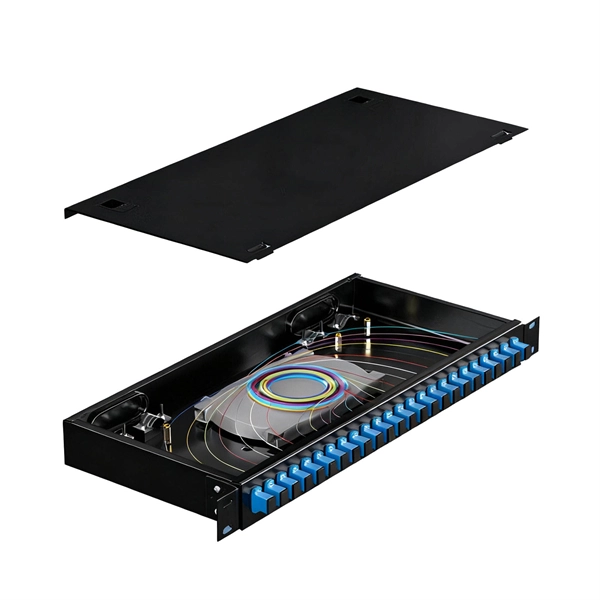
Wavelength Division Multiplexing – WDM, coarse, dense, optical fiber
TFF-based devices are widely used for coarse wavelength division multiplexing (CWDM) and for dense WDM (DWDM) with moderate channel counts (e.g., up to 16). They offer high isolation and thermal
Dense Wavelength Division Multiplexing
DWDM multiplexer/demultiplexer - The working of multiplexer and demultiplexer is to combine multiple optical indicators or signals into a single optical fiber and separates optical signals
Dense Wavelength Division Multiplexing
Dense Wavelength Division Multiplexing (DWDM) is defined as a method that multiplexes many wavelength channels into a single fiber, allowing for increased aggregate bandwidth per fiber. Each
Dense Wavelength Division Multiplexing (DWDM)
Dense wavelength division multiplexing (DWDM) employs multiple light wavelengths to transmit signals over a single optical fiber. Today, DWDM is a crucial component of optical networks because it
Dense Wavelength Division Multiplexing (DWDM)
The third choice for service providers is dense wavelength division multiplexing (DWDM), which increases the capacity of embedded fiber by first assigning incoming optical signals to specific
dense wavelength-division multiplexing (DWDM)
Learn how dense wavelength-division multiplexing (DWDM) dramatically scales bandwidth by combining up to 80 channels over a single pair
DWDM Explained: High-Capacity Optical Networks
DWDM, short for Dense Wavelength Division Multiplexing, is a core technology in modern optical fiber communication. It enables network operators
Dense wavelength division multiplexing networks: principles and
Abstract: The very broad bandwidth of low-loss optical transmission in a single-mode fiber and the recent improvements in single-frequency tunable lasers have stimulated significant advances in
Dense Wavelength Division Multiplexing (DWDM) Solutions
ettes suitable for the most stringent OSP environments. FOSC-type platforms have been mo-dified to improve st ain relief and ensure DWDM devices are vibration proof.
Dense Wavelength Division Multiplexing
5.1.1 Coarse wavelength-division multiplexing and dense wavelength-division multiplexing Wavelength-division multiplexing (WDM) enables multiple-shift usage of transmission fibers by transmitting a
What is Wavelength Division Multiplexing (WDM): A
Introduction to Wavelength Division Multiplexing (WDM) Wavelength Division Multiplexing (WDM) is a fiber optic transmission technique that
Dense Wavelength Division Multiplexers (DWDM)
Explore the role of Dense Wavelength Division Multiplexing (DWDM) in boosting network capacity, its applications, challenges, and future prospects.
Dense Wavelength Division Multiplexing Networks: Principles and
Dense Wavelength Division Multiplexing Networks: Principles and Applications Abstract: The very broad bandwidth of low-loss optical transmission in a single-mode fiber and the recent improvements in
Wavelength Division Multiplexing (WDM)
WDM is an acronym used for Wavelength Division Multiplexing. It is a technique in which signals of different wavelength are multiplexed together in order to get transmitted over an optical link.
What is Dense Wavelength Division Multiplexing?
Explore the applications, advantages, challenges, and future trends of Dense Wavelength Division Multiplexing in modern optical networks.
Wavelength-Division Multiplexing
Wavelength Division Multiplexing (WDM) is defined as an approach that multiplexes multiple wavelength channels from different end-users into a single fiber, facilitating the transmission of various services
What is Wavelength Division Multiplexing (WDM)?
Learn the basics of Wavelength Division Multiplexing (WDM), its mechanisms, key features like CWDM and DWDM, and applications in optical networks.
Dense Wavelength Division Multiplexing (DWDM) | Siberoloji
This article explains the technical foundations of Dense Wavelength Division Multiplexing (DWDM) technology and its impact on data communications and networking.
Related Video Reference
This video was associated with the source search result. Verify technical details against current product documentation and project requirements.