
Technical notes
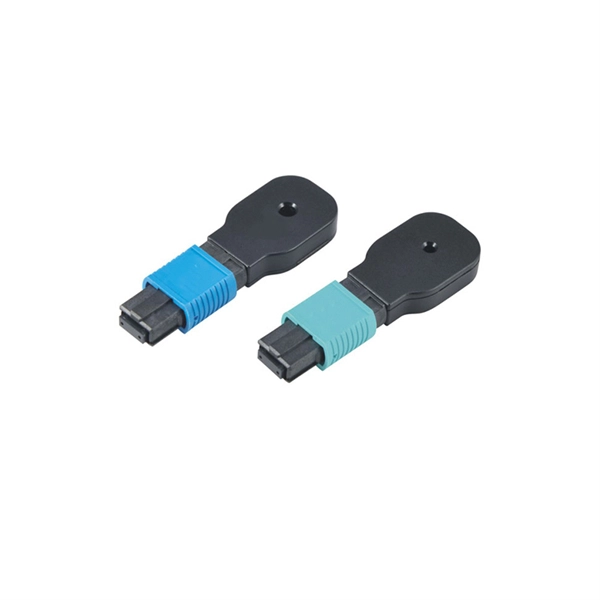
Linear Pluggable Optics Module Adaptation for a 102.4 Tbps Switch
We established a simulation model for the linear switch system and experimentally validated LPO module adaptation for a 102.4 Tbps switch with insertion loss exceeding 39 dB. The measured BER
OPTICAL CIRCUIT SWITCHING FOR AI AND
Executive Summary Optical Circuit Switching (OCS) has emerged as a critical technology for next‐generation Artificial Intelligence (AI) and hyperscale data‐center networks.
Cisco Optics | Transform Your Network
Get the highest quality, performance-leading optical transceivers for any network architecture. Find the transceiver model to fit your network.
Optical Switches
The fastest, smallest, most reliable optical switches in the industry. Used in medical devices, undersea cables, quantum computers, underground and outer space.
How to Implement Adaptive Optical Switching for Scalability
Adaptive optical switching represents a paradigm shift from traditional static optical networks toward dynamic, intelligent photonic systems capable of real-time reconfiguration.
Nanosecond optical switching and control system for data center
The authors report an optical switching and control system to synergistically overcome these challenges and provide enhanced performance for data center applications.
A Review of Silicon‐Based Integrated Optical Switches
Recent studies on silicon-integrated optical switches incorporating PCMs are also reviewed. Furthermore, the pros and cons of different types of
XPO: Redefining Pluggable Optics for AI Networking
The XPO pluggable module preserves the advantages of field pluggability, enabling quick replacement or upgrades of optical modules without servicing the entire switch and minimizing downtime. It also
Wavelength selective switching
Wavelength selective switching components are used in WDM optical communications networks to route (switch) signals between optical fibres on a per-wavelength basis.
Ultrafast optical circuit switching for data centers using integrated
Here, the authors report Si3N4 microcomb based ultrafast photonic switching to provide enhanced performance for data center applications.
Ultrafast optical circuit switching for data centers using integrated
Optical technologies could enable fast and power-efficient networks for data centers. Here, the authors report Si3N4 microcomb based ultrafast photonic switching to provide enhanced
Optical Switching Data Center Networks: Understanding Techniques
This paper first summarizes the topologies and traffic characteristics in data centers and analyzes the reasons and importance of moving to optical switching. Recent techniques related to the optical
Ethernet-to-Fiber Media Converters
Moxa''s Ethernet to Fiber media converters feature innovative remote management, industrial-grade reliability, and a flexible, modular design that can fit any type of industrial environment.
MAP Optical Switch Module (mOSW/mISW)
Overview Manufacturing test automation is critical to reducing product costs and optical switches are at the heart of any automated test system. The VIAVI
H+S Polatis
Software Defined Networking enabled All Optical Switches. Industry leading performance - optical loss below 1dB. Customized MxN configurations up to 384x384 ports, SDN enabled with embedded
Optical Components and Modules
Everything you need to build an optical network from end-to-end. Thin-film filter and PLC based AWG for multiplexing, a full suite of components for optical amplification use, optomechanical or MEMS-based
Adaptive optics
Adaptive optics (AO) is a technique of precisely deforming a mirror in order to compensate for light distortion. It is used in astronomical telescopes and laser
The difference between switches and routers and optical module
What is the difference between a switch and a router? This guide explains Layer 2 vs Layer 3,OSI model roles,and how to choose the right optical module collocation for your network.