
Technical notes
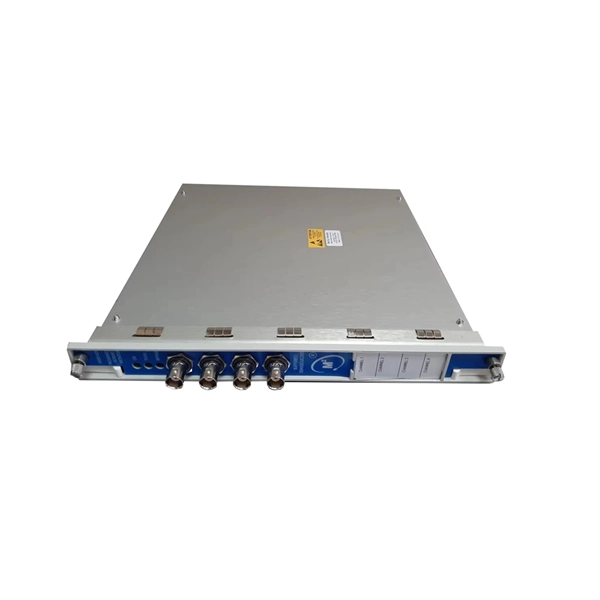
Protection Function Testing Procedure
Protection Function Testing Procedure: Step-by-step guide for stability, sensitivity & differential relay tests ensuring reliable substation protection systems.
Fundamental Techniques of Relay Protection Testing for Technicians
Master fundamental relay testing techniques for technicians. Learn to test, troubleshoot, and commission protective relay systems in power and electrical systems.
Protection Relay Testing and Commissioning
Individual test programs for each type of protection relay are needed, but the interface used is standard for all protection relay types. Control of input waveforms and analogue measurements, the
PROTECTIVE RELAY TESTING
A comprehensive testing program should simulate fault and normal operating conditions of the relay. Acceptance testing, commissioning, and startup will include control power tests, current transformer
Protection Relay Testing
Reliably working protection relays are key in modern energy systems. Read on to learn about best practices, challenges, and trends in protection testing.
Operation, maintenance, and field test procedures for protective relays
Operation, maintenance, and field test procedures for protective relays and associated circuits (photo credit: Omicron)
Protection relay testing and diagnostic solutions
Discover Megger''s protective relay test set and software solutions for all relay types and schemes across diverse grid protection needs.
The Relay Testing Handbook: Principles and Practice
The complete handbook combines basic electrical fundamentals, detailed descriptions of protective elements, and generic test plans with examples of real-world applications, enabling you to confidently
Testing and Maintenance of Protective Relays
These cover the mechanical performance of relay such as tendency to vibrate, effect of shocks, balancing of rotor, endurance tests, deviability of springs etc. Special test equipment is necessary to
Types of Protection Relays and Testing procedures
Regular testing and maintenance of protection relays are essential to verify their proper operation, detect faults, and mitigate risks. By conducting
How to Test Protective Relays Correctly
How to Test Protective Relays Correctly Usually I try to keep my posts as simple and practical as possible. This post is a little different because I will discuss how
FIST 3-8-March18-2010
The initial functional test must be conducted with the lockout relay in an “as-found” condition to prove that a protective relay action actually will trip the lockout relay and that the lockout will trip circuit
FIST 3-8-March18-2010
The protection circuits include all low-voltage devices and wiring connected to instrument transformer secondaries, telecommunication systems, auxiliary relays and devices, lockout relays, and trip coils
Microsoft Word
1. Introduction Why do we use protective relays? Relays are frequently found device in high voltage or medium voltage power system. Their main duty is to isolate a faulty section within few cycles but by
Protection relay testing and diagnostic solutions
Verify protection schemes during commissioning and maintenance to ensure reliable system operation. Megger''s relay testing solutions help prevent
Preparation of Papers in a Two-Column Format
It is therefore important to validate the settings of power protection equipment and to confirm its performance when subject to different fault conditions. Traditionally, commissioning engineers make
Secondary injection tests for checking the correct
The purpose of secondary injection testing is to prove the correct operation of the protection scheme that is downstream from the inputs to the
Microsoft Word
The paper “Assessing the Effectiveness of Self-Tests and Other Monitoring Means in Protective Relays” shows a strategy for relay testing . Using the best testing method is integral to a good testing
Related Video Reference
This video was associated with the source search result. Verify technical details against current product documentation and project requirements.