
Technical notes
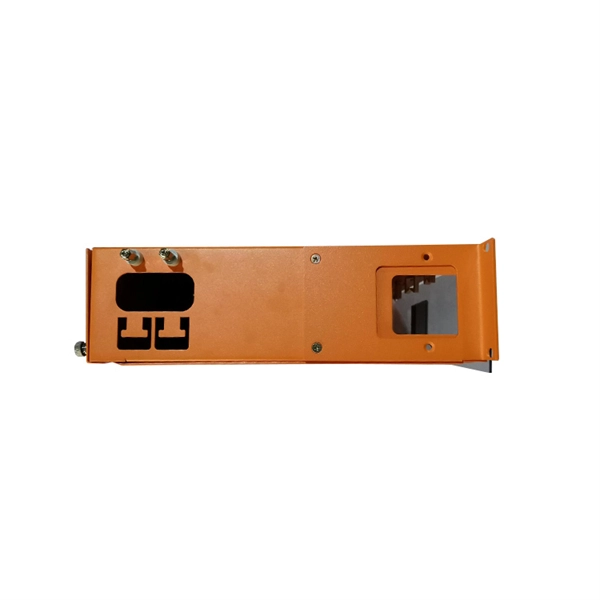
Beam splitter
OverviewReflection beam splittersDesignsPhase shiftClassical lossless beam splitterUse in experimentsQuantum mechanical description
Reflection beam splitters reflect parts of the incident radiation in different directions. These partial beams show exactly the same intensity. Typically, reflection beam splitters are made of metal and have a broadband spectral characteristic. Due to their compact design, beam splitters of this type are particularly easy to install in infrared detectors. At this application, the radiation enters through the aperture ope
What are Beamsplitters?
Beamsplitters are optical components used to split incident light at a designated ratio into two separate beams. Additionally, beamsplitters can be used in reverse to combine two different beams into a
Beam Splitters
When working with lasers, it is often necessary to split a laser beam into two or more defined partial beams. There are a variety of beam splitters for these applications, with different advantages and
OptoSigma
There are two main types of beamsplitters, plate beamsplitter and cube beamsplitter and each has their own advantages. Some industries that use beamsplitters are
Optical Beamsplitters | Beamsplitter Selection | Edmund Optics
Beamsplitters are optical components used to split input light into two separate parts. Beamsplitters are common components in laser or illumination systems. Beamsplitters are also ideal for fluorescence
What is a Beam Splitter?
While most beam splitters have only two output ports, there are also beam splitters with multiple outputs. They are fabricated using multiple cascaded beam splitters.
All You Need to Know About Beam Splitters
Beam splitters form a key part of teleprompters and play a critical role in the media industry. They allow performers, politicians, rs, and others to read scripts without losing eye...
What Are Optical Beam Splitters?
Various types of beam splitters manipulate the path of a light beam, serving diverse applications in technology. Discover the different types, coatings and uses of beam splitters.
How Beamsplitters Work: Types, Mechanisms, and Applications
Beamsplitters may vary in terms of their size, shape, and material, but all work on the principle that the splitter transmits one part of the beam while reflecting the other.
Beam Splitter
4.1 Beam splitters Metasurfaces are a solution to the existing problems of conventional beam splitters composed of natural materials [14, 206–212] which impose a relatively high cost, large loss and
What Are Optical Beam Splitters?
What Are Optical Beam Splitters? Key Takeaways Beam splitters, essential for applications such as teleprompters and holograms, have different types that play a vital role in splitting light beams, while
How Beam Splitters Work
Beam splitters are used to manipulate and control light, making them valuable devices in both classical and quantum optics. A beam splitter is capable of introducing phase shifts and quantum
Photonics 101
Usually, a non-polarizing beam splitter will split the beam on a 50/50 ratio while a polarizing beam splitter tends to lean towards a 95/5 ratio. Other than the cube beam splitter, there is
What is a Beam Splitter?
A beam splitter or power splitter is an optical device that can split an incident light beam e.g. a laser beam into two or sometimes more beams, which may or may not have the same optical
What is a Beam Splitter, and What are Its Functions and
A beam splitter is an optical device designed to split an incident light beam into two or more separate beams. It operates based on the principles of
The Buyer''s Guide to Beam Splitters | Blue Ridge Optics
Matching the beam splitter''s specifications to the characteristics of the light source ensures optimal performance. This minimizes light losses and aberrations while maintaining the
Beam splitter | Description, Example & Application
Beam splitters are typically characterized by their splitting ratio. The splitting ratio refers to the proportion of light that is transmitted and reflected by the device. For example, a 50:50 beam
The Many Worlds of the Quantum Beam Splitter
The Many-Worlds Interpretation (MWI) of quantum physics, proposed by Hugh Everett in 1957, suggests that every quantum event spawns alternate universes. David Deutsch later revived
Related Video Reference
This video was associated with the source search result. Verify technical details against current product documentation and project requirements.