
Technical notes
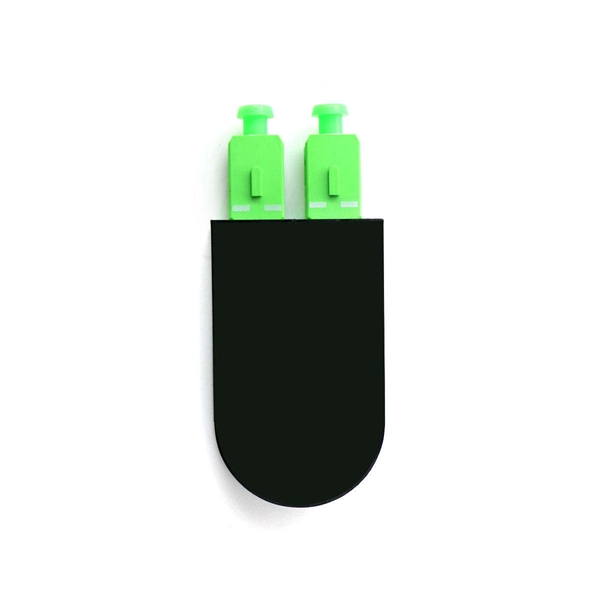
Wavelength Division Multiplexing: Working principle of division unit
The multiplexer, often referred to as the OMU, is responsible for combining multiple optical signals, each carrying a distinct data stream and operating at a unique wavelength, into a single optical signal for
High-Performance Wavelength Division
Here, we develop a novel design approach that co-optimizes inverse-designed wavelength division multiplexers and distributed Bragg gratings to achieve ultra-low crosstalk without compromising
Wavelength Division Multiplexing (WDM) Tutorial
Wavelength Division Multiplexer and Demultiplexer Unit (ODU / OMU) Wavelength Division multiplexer can be divided into wavelength division multiplexer at the transmitter end and
Wavelength Division Multiplexing
Wavelength division multiplexing is a multiplexing technique working in the wavelength domain. It is commonly used in the area of optical fiber
Design analysis for wave length division multiplexing
Simple light pulses were used in the early optical fiber transmission systems to transmit data through twisted glass beams. To symbolize the zeros and units of the digital data, the light was
Wavelength-division multiplexing
In fiber-optic communications, wavelength-division multiplexing (WDM) is a technology which multiplexes a number of optical carrier signals onto a single
Parallel wavelength-division-multiplexed signal transmission and
Due to the lower data rate of the IM-DD system for a single wavelength channel than the coherent scheme, wavelength-division multiplexing (WDM) technology is commonly employed to
WDM 101 | Optical Communications | Corning
Wavelength division multiplexing (WDM) can help network operators stay ahead of growing demand for bandwidth. Read on to learn the fundamentals of this useful technology.
What does Wavelength Division Multiplexing OMU refer to
– How wavelength division multiplexing Wavelength division multiplexing (WDM) multiplies fiber capacity with up to 80 channels on one fiber. Learn how the key components work together.
Wavelength Division Multiplexing
Wavelength division multiplexing (WDM) is a technique of multiplexing multiple optical carrier signals through a single optical fiber channel by varying the wavelengths of laser lights.
Wavelength Division Multiplexing (WDM)
Wavelength Division Multiplexing (WDM) Abstract Wavelength division multiplexing or WDM allows the combining of a number of independent information-carrying wavelengths onto the same fiber,
Wavelength Division Multiplexing | WDM Technology in
Learn why Wavelength division multiplexing (WDM) technology carries great potential to help network operators stay ahead of growing demands
Wavelength Division Multiplexers (WDM)
Wavelength Division Multiplexing (WDM) is a technique in fiber-optic communication systems that enables multiple optical signals with different wavelengths to be combined, transmitted, and
Wavelength Division Multiplexing: An Overview & Recent Developments
Wavelength division multiplexing (WDM) is an emerging technology that enables carriers to significantly increase transport capacity while leveraging existing fiber-optic equipment. Unlike conventional TDM
What does Wavelength Division Multiplexing OMU refer to
What is Wavelength Division Multiplexing (WDM)? Wavelength Division Multiplexing (WDM) is a technique in optical communication that allows multiple data signals to be transmitted simultaneously
Design analysis for wave length division multiplexing
Wavelength division multiplexing WDM, has long been the preferred method for transferring massive volumes of data between locations. By enabling
3.5 Wavelength multiplexing and demultiplexing
3.5 Wavelength multiplexing and demultiplexing Wavelength multiplexers and demultiplexers are needed in order to be able to use wavelength division multiplexing. With just two wavelengths, the
Introduction To WDM | part of Wavelength Division Multiplexing: A
This introductory chapter of Wavelength Division Multiplexing: A Practical Engineering Guide traces the history of wavelength division multiplexing (WDM). WDM refers to a multiplexing and
Related Video Reference
This video was associated with the source search result. Verify technical details against current product documentation and project requirements.