
Technical notes
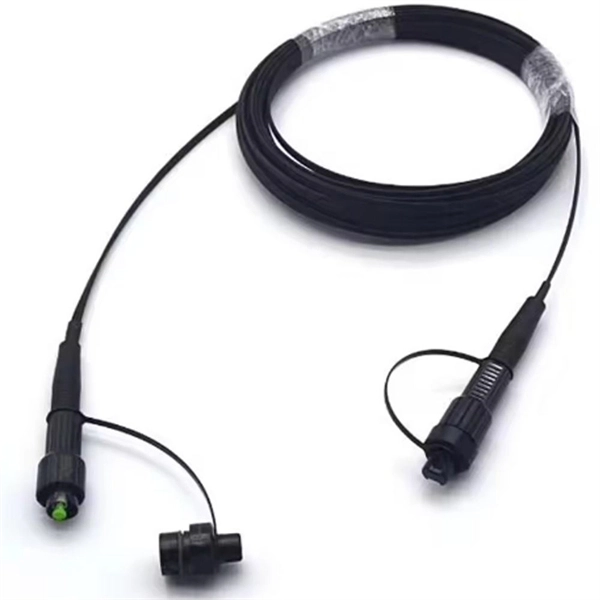
Optical Fiber Transmission
Fig. 1.2.1 shows the block diagram of the simplest fiber-optic communication system, which includes an optical transmitter, an optical receiver, and a transmission optical fiber.
Transmission Media in Computer Networks
Major types of guided media included Twisted Pair Cables, Coaxial Cables and Optical Fiber Cables. Offers higher data transmission rates
Fiber Optic Cable Types: A Complete Guide
Fiber optic cables are often seen as the gold standard for network cabling. Unlike copper wires, which are limited by lower data transmission
Wired Communication Media
Fiber optic cables allow data transmission with the help of electrical signals. These are thin pipes made up of glass or plastic known as optic fibers
Fiber optics | Definition, Inventors, & Facts | Britannica
fiber optics, the science of transmitting data, voice, and images by the passage of light through thin, transparent fibers. In telecommunications, fiber
What Is Fiber Optics? Definition from SearchNetworking
Learn how fiber optics works and why fiber is a common alternative to copper cabling. Also explore the advantages and disadvantages of optical fiber.
Fiber Optic Communication System : Basic Elements
Fiber-optic communication How a Fiber Optic Communication Works? Unlike copper wire-based transmission where the transmission entirely depends on electrical
Basics of Fiber Optics
Mark Curran/Brian Shirk Fiber optics, which is the science of light transmission through very fine glass or plastic fibers, continues to be used in more and more applications due to its inherent advantages
What Is Fiber Optic Cable?
A fiber optic cable is a long-distance network telecommunications cable made from strands of glass fibers that uses pulses of light to transfer data.
Fiber Optics: Understanding the Basics
Copper wire is about 13 times heavier. Fiber also is easier to install and requires less duct space. Applications Some of the major application areas of optical fibers are: • Communications — Voice,
Copper vs. Fiber Optic Cables: A Comprehensive Comparison
Fiber Optic System The growing demand for faster and higher-volume data transmission over longer distances has driven the development of fiber optic cables, superseding traditional copper wires.
Fiber Optic Cable Buying Guide
How fiber optic cables work Fiber optic technology offers several key benefits including higher bandwidth for data transmission, longer transmission distances,
What Is Optical Fiber Technology, and How Does It Work?
So, what are fiber optics used for? In a nutshell, for signal transmission, communication and vision (video). How Does a Fiber Optic Cable Work? Light
How do Fiber Optic Cables Transmit Data, and How Does It Work?
Fiber optic technology has changed the way data is transmitted in today''s world. It has replaced traditional copper cables because it can transfer data faster and over longer distances
What Is Fiber Optics? A Guide
Future Trends in Fiber Optics The future of fiber optics is exciting, with ongoing research and development aimed at further improving the technology. Data transmission rates have been
Transmission Media in Computer Networks
Optical Fiber Cable Optical Fiber Cable is a guided transmission medium that transmits data in the form of light signals through a glass or plastic core using the principle of total internal
The FOA Reference For Fiber Optics
For monitoring and managing networks, they use a variety of means of communications, including running fiber optic cables along the transmission and
Optical fiber
Extrinsic fiber optic sensors use an optical fiber cable, normally a multi-mode one, to transmit modulated light from either a non-fiber optical sensor—or an electronic