Skip to content
PROMETHEASOPTICAL Send a project enquiry
Reference library

Epon Fiber Optic Communication

Published
  • Epon
  • Fiber
  • Optic
Source context

AI source overview

EPON (Ethernet Passive Optical Network) is a high-speed fiber-optic network standard that delivers data, voice, and video services using Ethernet over a point-to-multipoint passive optical architecture.

Overview of EPONEPO

N is a fiber-optic access technology designed to provide cost-effective, scalable broadband connectivity, particularly for Fiber to the Home (FTTH) deployments. It uses passive optical splitters to connect a single Optical Line Terminal (OLT) at the service provider's central office to multiple Optical Network Units (ONUs) at customer premises, forming a point-to-multipoint topology. This passive design reduces the need for active electronics in the field, lowering maintenance costs and energy consumption while improving reliability.

How EPON Works

Downstream Transmission: The OLT broadcasts Ethernet frames to all ONUs.

Each ON

U filters the frames based on its MAC address to accept only the relevant data. Upstream Transmission: ONUs transmit data to the OLT using Time Division Multiple Access (TDMA), ensuring collision-free communication. Wavelength Division Multiplexing (WDM): EPON separates upstream and downstream traffic over a single fiber using different wavelengths, enabling efficient bidirectional communication.

EPO

N ModulesEPON networks rely on EPON modules to facilitate high-speed data transmission. These modules include: OLT Modules: Located at the service provider's end, they manage traffic and connect to multiple ONUs.

ON

U Modules: Located at the user end, they receive and transmit data to the OLT. Transmission Rates: Common modules include 1.25G EPON for 1.25 Gbps and 10G EPON for up to 10 Gbps, supporting bandwidth-intensive applications like UHD video streaming and cloud services. Modules perform optical signal modulation/demodulation, protocol conversion, and signal amplification, optimizing network performance and reliability.

Advantages of EPON

High Bandwidth and Symmetry: Supports symmetrical speeds up to 1 Gbps or higher, with 10G EPON modules enabling even faster connections. Energy Efficiency: Passive splitters reduce power consumption and maintenance requirements. Scalability: Point-to-multipoint architecture allows easy expansion to multiple users without additional active devices.

Reliability: Less affected by electromagnetic interference and lightning, resulting in fewer faults.

Cost-

Effectiveness: Integrates multiple services (data, voice, video) over a single fiber, reducing infrastructure costs.

EPO

N vs GPONWhile both EPON and GPON are passive optical networks, EPON is based on Ethernet standards, making it easier to integrate with existing Ethernet infrastructure. Typical differences include: Speed: EPON usually supports 1 Gbps symmetrical, whereas GPON can reach 2.5 Gbps downstream and 1.25 Gbps upstream. Deployment: EPON is cost-effective where Ethernet is dominant; GPON is preferred for higher capacity and future scalability.

Protocol: EPON uses Ethernet frames; GPON uses ATM or TDM, which can complicate integration with Ethernet networks. ApplicationsEPON is widely used for: Residential broadband (FTTH)Enterprise networks5G backhaul and smart city infrastructureIPTV, VoIP, and high-speed internet services EPON's combination of high-speed performance, energy efficiency, and scalability makes it a sustainable and versatile solution for modern fiber-optic communication networks.

Research context

Reference summary

Passive optical networks were first proposed by in 1987. Two major standard groups, the (IEEE) and the of the (ITU-T), develop standards along with a number of other industry organizations. The (SCTE) also specified f.

Additional context

Source notes

Passive optical networks were first proposed by in 1987.
Two major standard groups, the (IEEE) and the of the (ITU-T), develop standards along with a number of other industry organizations.
The (SCTE) also specified f…

From reference to enquiry

Questions for your project

Use these editorial prompts alongside the linked excerpts. They identify items to confirm for your project.

Technical notes

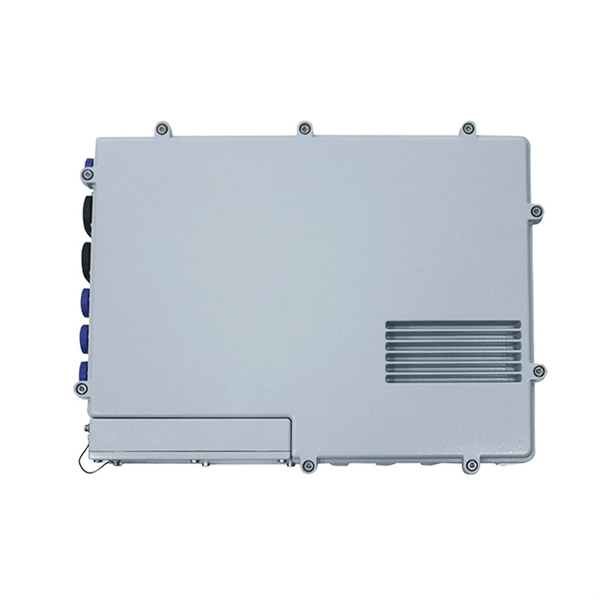
Illustrative equipment image

EPON Explained: Unlocking High-Speed Fiber

In today''s connected world, EPON (Ethernet Passive Optical Network) is a game-changer for delivering blazing-fast internet. This guide dives

Passive optical network

OverviewHistoryComponents and characteristicsNetwork elementsUpstream bandwidth allocationVariantsEnabling technologiesFiber to the premises

Passive optical networks were first proposed by British Telecommunications in 1987. Two major standard groups, the Institute of Electrical and Electronics Engineers (IEEE) and the Telecommunication Standardization Sector of the International Telecommunication Union (ITU-T), develop standards along with a number of other industry organizations. The Society of Cable Telecommunications Engineers (SCTE) also specified radio frequency over glass f

A Step-by-Step Introduction to EPON Modules

EPON modules are integral components in fiber-to-the-home (FTTH) networks, delivering high-speed internet access to residential and commercial buildings. They bring several benefits,

Passive Optical Networks: An intro to xPON

A Passive Optical Network (PON) is a fiber-optic network that uses passive splitters to deliver data from a single optical fiber to multiple endpoints, such as homes and businesses.

EPON vs GPON: The Ultimate Guide to Your Fiber Optic Network

GPON vs EPON: Compare speeds, user capacity, cost, and Ethernet compatibility to choose the best fiber network for your home or business needs.

What Is Passive Optical Networking (PON)? GPON vs. EPON

EPON technology complies with IEEE Ethernet standards, and is a good choice for transitioning to an all-IP network. Best suited for business users and enterprise-level applications that

EPON, a long-haul Ethernet access technology

EPON is a long-range Ethernet access technology based on fiber optic transport network that adopts a point-to-multipoint architecture.

2026 PON Evolution Guide: EPON, GPON, XGS-PON and 10G-EPON

Learn how PON evolved from APON/BPON to EPON, GPON, XGS-PON and 10G-EPON, and how to choose right fiber access technology for FTTH, campus and hotel networks.

EPON — An All Fiber Access Network

EPON leverages an all-fiber optic transport system and signaling architecture called an optical distribution network or ODN. The ODN is used in place of our

BPON vs EPON vs GPON: A Comparative Analysis

This article compares BPON, EPON, and GPON technologies, highlighting the key differences between them. PON stands for Passive Optical Network, a common access technology used by service

The evolution of Ethernet Passive Optical Network (EPON) and future

The downstream channels of both the 1 G-EPON and 10 G-EPON are wavelength multiplexed, presenting two different logical channels on the same optical fiber. Gigabit PON and

PON, EPON, GPON: Everything You Need to Know

A look at the basics of fiber optic networking, including an explanation of PON, EPON, GPON and understanding OLT, ONT/ONU and more.

EPON Module VS GPON Module: What Are the Main Differences?

PON transceivers are essential for delivering cost-effective, high-speed broadband services over fiber optic networks, ensuring efficient and reliable communication for users. Here, we''ll delve into two

Understanding EPON vs GPON: Which One Fits Your Network?

Choosing the right PON (Passive Optical Network) technology is a key decision when building or upgrading a fiber network. Two widely used standards are EPON (Ethernet Passive

The difference between EPON and GPON

The difference between EPON and GPON What is EPON EPON is an IEEE standard. EPON adopts a point-to-multipoint structure and passive

What is an Ethernet Passive Optical Network (EPON)?

Ethernet Passive Optical Network (EPON) is a passive optical network technology solution that relies on the Ethernet protocol as the foundation

What Is Passive Optical Networking (PON)? GPON vs. EPON

Passive Optical Network (PON) is a point-to-multipoint optical access technology. Ethernet PON (EPON) and gigabit PON (GPON) are the most common PON technologies and have the

PON Network: the Differences of GPON and EPON

Differences between GPON and EPON Transmission Rate GPON and EPON are two typical optical passive networks. They are short-distance optical cables and are mainly used for

Related Video Reference

This video was associated with the source search result. Verify technical details against current product documentation and project requirements.

Share your network requirements

Share the fiber interfaces, termination capacity, cable route and evidence required for handover.

Send a project brief